YouTube Hashtags Best Practices 2026: Limits, Placement, Trending
Quick answer: Hashtags still work on YouTube in 2026, but they are not a magic ranking button. They help with topic classification and initial audience matching. The practical best practice is to use 3-5 relevant hashtags, keep them aligned with the actual video topic, and avoid hashtag stuffing.
If you searched “youtube hashtags best practices 2026,” “youtube hashtag limit 2026,” “do hashtags work on youtube,” or “title vs description for Shorts hashtags,” this guide gives direct answers first, then full strategy.
YouTube Hashtags 2026: Quick Rules
| Question | Quick answer |
|---|---|
| Do hashtags work on YouTube? | Yes, for categorization and discovery context, not direct guaranteed ranking boosts. |
| Hashtag limit | If you use more than 15 hashtags, YouTube may ignore all hashtags on that video. |
| Best number to use | Usually 3-5 hashtags. |
| Where to place hashtags | Mostly in the description; if used in title, keep to 1-2 max at the end. |
| Shorts hashtags | Keep them precise and niche-relevant; avoid generic spam tags. |
This page also covers trending hashtags strategy for 2026 and includes our free professional hashtag generator tool.
Trending YouTube Hashtags April 2026: How to Use Them Safely
Many creators search for terms like “trending youtube hashtags april 2026” or “trending youtube shorts hashtags iraq april 2026.” The key is to use trends as a filter, not as a copy-paste list.
Use this framework:
- Pick one broad trend hashtag relevant to your niche.
- Add 2-3 niche hashtags that describe your exact video topic.
- Add one geo/context hashtag if your audience is local (for example Iraq or MENA-focused content).
- Validate relevance in YouTube search autocomplete before publishing.
If trend hashtags are not directly related to your content, skip them. Irrelevant trend tags often increase low-quality impressions but hurt retention and CTR.
But wait: trending visibility without correct placement still underperforms.
What Are YouTube Hashtags?
Technically, YouTube hashtags are keywords or short phrases preceded by the hash symbol (#) that are inserted into video titles or descriptions to create clickable hyperlinks. When a viewer clicks a hashtag, they’re taken directly to a dedicated search results page displaying videos sharing the same tag.
However, understanding hashtags within this simple functional framework severely underestimates the deep transformations that YouTube underwent in 2026.
Hashtags as “Context Anchors”
Hashtags have evolved in YouTube’s modern machine learning infrastructure into what experts call “Context Anchors.” YouTube’s algorithm doesn’t use hashtags as a direct discovery tool that forces the system to widely distribute a video. Instead, it uses them as a critically important metadata signal to build a “Confidence Score” about the video’s precise topic.
When you upload a video, the AI system performs complex analysis including:
- Reading pixels (understanding visuals)
- Analyzing audio (producing transcripts)
- Processing metadata (titles, descriptions, and hashtags)
The hashtag’s function becomes a tie-breaker when video content is open to multiple interpretations. For example, if a creator uploads a short about “ice bathing” without hashtags, the AI might classify it with low confidence under generic categories like “swimming” or “winter.” Showing this to recreational swimming audiences leads to poor retention and quick departures.
But by adding precise hashtags like #Biohacking or #IceBath, the creator establishes an accurate context telling the algorithm to target those interested in advanced physical health and biohacking culture - raising the algorithmic confidence score and ensuring the video is tested in front of the right audience.
Bottom line: Hashtags in 2026 don’t cause amplification - they determine categorization. The final distribution decision depends exclusively on user behavior (skip rates, session duration), but hashtags ensure your video’s quality is tested on the right battlefield.
YouTube Hashtags vs Tags: Key Differences
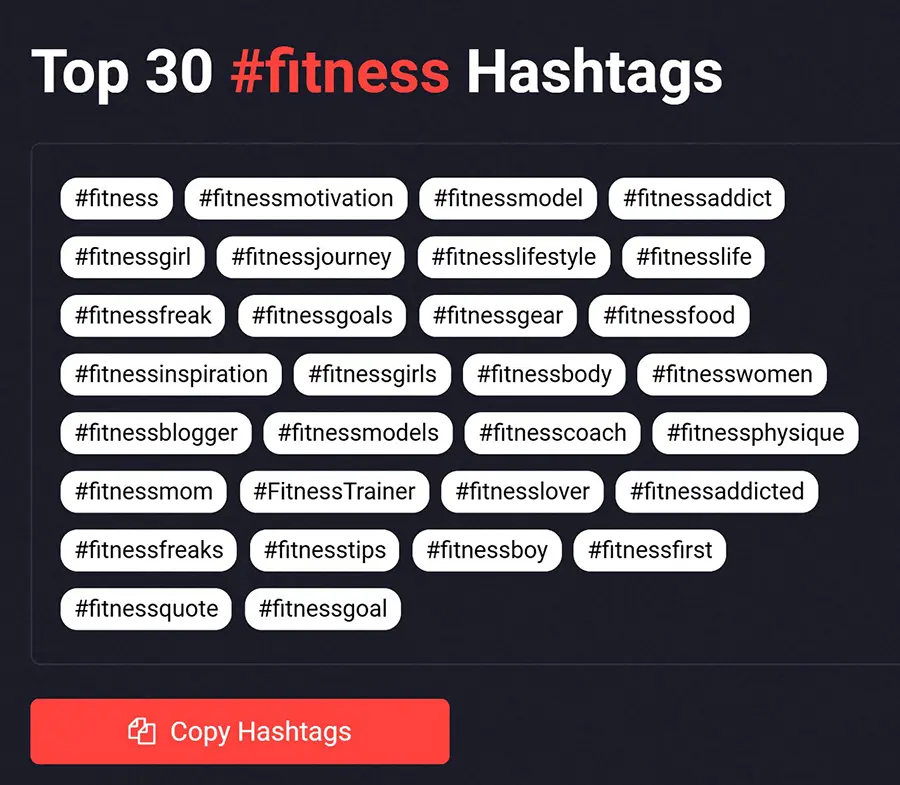
A widespread confusion exists between visible “Hashtags” and hidden “Tags.” While the terms sound similar, each tool serves a completely different algorithmic engine in YouTube’s architecture.
| Feature | Hashtags (#) | Tags (Hidden) |
|---|---|---|
| Format | Hash symbol (#) + connected words, no spaces (e.g., #Tech_Review) | Individual words, phrases, or sentences separated by commas (e.g., best tech review 2026) |
| Location | Embedded in video title or description box | Dedicated “Tags Box” in advanced upload settings (500 character limit) |
| Visibility | Fully visible to viewers as clickable blue hyperlinks | Completely hidden from normal user interface |
| Algorithm Target | Feeds the “Feed Algorithm” for trending velocity and browse discovery | Feeds the “Search Algorithm” for relevance confirmation |
| 2026 Strategy | Target trending topics and sub-communities with precision as context anchors | Use as a “Misspelling Goldmine” for long-tail keywords unsuitable as visible hashtags |
The “Misspelling Goldmine” Strategy
One of the most important tactics for hidden tags in 2026. With rising voice search and rapid mobile typing (63-70% of total watch time comes from mobile devices), users make frequent spelling errors. Hundreds of thousands search for “Shorst” instead of “Shorts,” “Entreprenur” instead of “Entrepreneur,” or “ChatGBT” instead of “ChatGPT.”
By deliberately including these misspellings in the hidden Tags box, creators capture massive traffic completely free from competition while maintaining professional appearance with correctly spelled visible hashtags.
Pro tip: Use both our Hashtag Generator for visible hashtags AND our Tag Generator for hidden tags to maximize SEO impact.
How Many Hashtags Should You Use?
YouTube has long abandoned rewarding keyword stuffing and moved toward punishing randomness while rewarding precision. Here’s the data-backed breakdown:
| Hashtag Count | Algorithm Response | Strategic Rating |
|---|---|---|
| 1-2 hashtags | Massive algorithmic weight per hashtag. Ideal for video titles. | Excellent for hyper-targeting, but may limit broader discovery |
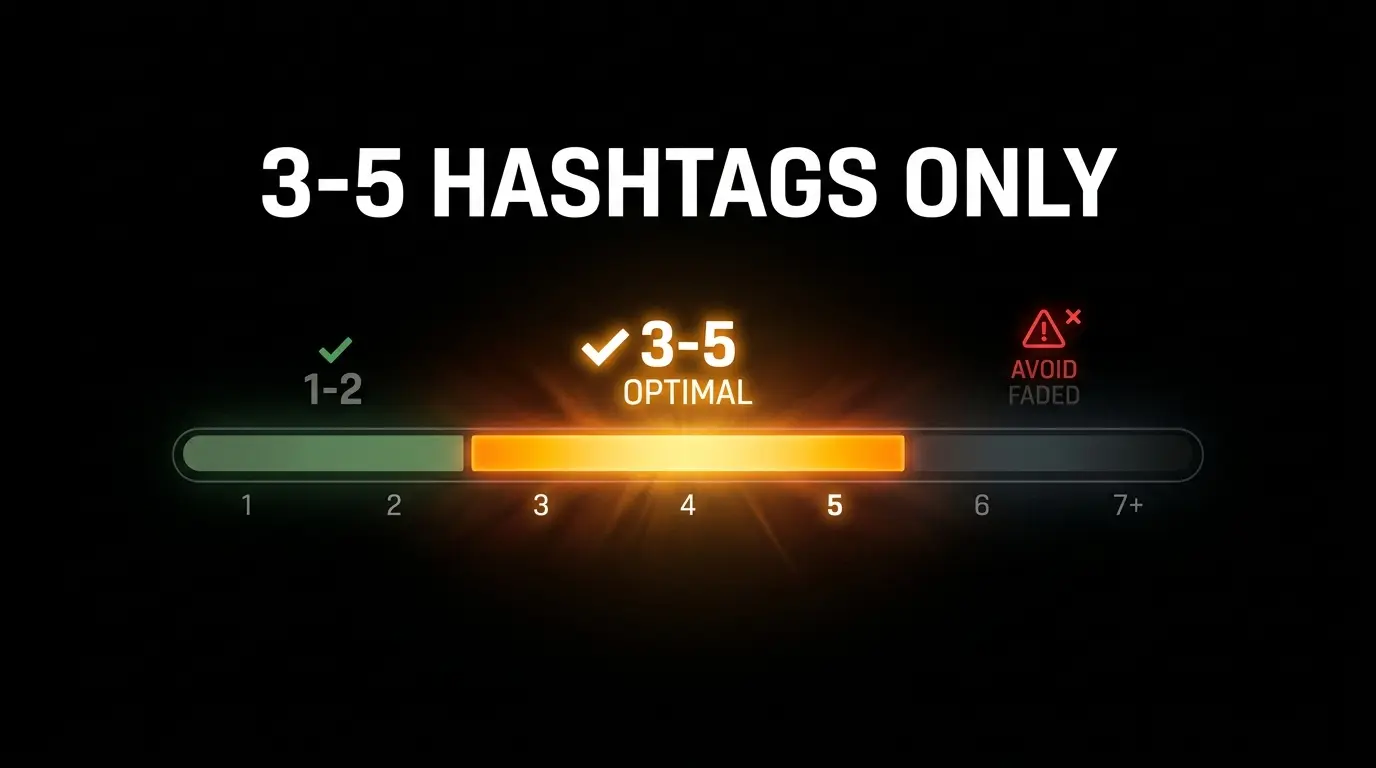
| 3-5 hashtags | The Golden Range. Aligns with YouTube’s official recommendations. Highest performance without triggering spam filters. | Optimal balance between discoverability and topical focus |
| 6-14 hashtags | ”Diluted Relevance” begins. AI attention scatters. YouTube practically ignores hashtags after the 5th. | Wasteful - weakens contextual signals |
| 15+ hashtags | Penalty Activation. Algorithm classifies content as spam. ALL hashtags are completely ignored. | Marketing suicide - video loses all hashtag-based visibility |
Why 3-5 Works Best
The success of the golden range comes down to “Hierarchical Prioritization.” YouTube weighs the first signals heaviest - the first 3 hashtags carry the bulk of context definition, while the rest fade in importance progressively.
Adding 10 extra hashtags doesn’t give your video 10 extra chances. It tells the system your content is unfocused and scattered, pushing the algorithm to exclude it from precise recommendations.
Where to Put Hashtags on YouTube
YouTube assigns different weighting mechanisms based on where hashtags are placed within your metadata structure.
1. In the Video Title
The title carries the heaviest and fastest algorithmic weight in YouTube’s 2026 system. A hashtag in the title ensures high-priority classification and immediate discovery.
Critical rules for title hashtags:
- Use a maximum of 1-2 hashtags in the title
- Place them at the very end of the title text
- Never let hashtags consume the opening characters - your title’s opening words must hook the human viewer first
- Title real estate on mobile screens is limited - hashtags at the beginning kill your CTR
2. In the Description Box (Recommended)
The description box is the safest and most powerful environment for building a sustainable hashtag strategy. When you place hashtags in the description, YouTube automatically extracts the first 3 and displays them prominently above or below the video title.
Best practices for description hashtags:
- First 100 characters matter most - write a natural descriptive sentence with your primary keyword and embed one precise hashtag within it
- Stack remaining hashtags at the bottom - group your 3-5 targeted hashtags at the end of the description, separated from body text by line breaks
- This keeps the UX clean while giving the algorithm full indexing data
For the complete guide on writing SEO-optimized descriptions that maximize hashtag placement and keyword coverage, see our YouTube Description Generator Guide.
YouTube Shorts Hashtags: Title vs Description (2026)
For Shorts, placement clarity matters:
- Put most hashtags in the description.
- Keep title clean for click intent and readability.
- If you add hashtags in title, keep them to 1-2 max at the end.
A practical Shorts setup:
- Title: clear hook without clutter.
- Description line 1: one short context sentence.
- Description end: 3-5 relevant hashtags.
This balance supports both user experience and algorithmic categorization.
Best YouTube Hashtags by Niche [2026]
To dominate algorithmically in 2026’s hyper-personalized recommendation environment, professionals use the “3-Layer Approach” or “Targeting Pyramid”:
- Broad Layer - General reach hashtags
- Niche Layer - Industry-specific hashtags
- Specific Layer - Video/series-specific hashtags
Gaming Hashtags
Gaming remains YouTube’s largest entertainment engine. Minecraft alone has surpassed a trillion views in record time, while the historic anticipation for GTA VI in late 2026 dominates the gaming community.
| Layer | Recommended Hashtags |
|---|---|
| Broad | #Gaming, #GamePlay, #YouTubeGaming, #GamersOfYouTube |
| Niche | #eSports, #PCGaming, #ConsoleGaming, #GamingClips, #MobileGaming |
| Specific | #GTAVI, #GTA6, #Minecraft, #ElderScrollsVI, #Roblox, #BGMI |
Optimal combo for a GTA leak video: #Shorts #GamingClips #GTAVI #GamePlay
Music Hashtags
The music sector on YouTube is undergoing a radical transformation with AI music generation and growing demand for lofi study/work radio channels.
| Layer | Recommended Hashtags |
|---|---|
| Broad | #Music, #Song, #MusicVideo, #NewMusic, #MusicShorts |
| Niche | #Lofi, #IndependentArtist, #Cover, #SingerSongwriter, #Musician |
| Specific | #AIMusic, #ArabicMusic, #ArabicSong, #InstrumentalArabicMusic |
Optimal combo for a relaxation track: #Music #Lofi #IndependentArtist #AIMusic
Comedy Hashtags
Comedy in 2026 thrives on fast content, POV scenarios, and short skits reflecting relatable everyday situations.
| Layer | Recommended Hashtags |
|---|---|
| Broad | #Comedy, #Funny, #Humor, #LOL, #LMAO, #FunnyVideo |
| Niche | #Meme, #MemesDaily, #Skit, #Prank, #Reaction, #ComedyShorts |
| Specific | #POV, #Relatable, #CorporateHumor, #InflationHumor |
Optimal combo for a comedy short: #Shorts #POV #Comedy #FunnyMemes #Relatable
Shorts Hashtags
YouTube Shorts dominate global content consumption. Videos under one minute represent approximately 75-77% of all global views in late 2025 and early 2026, surpassing 200 billion daily views.
In early 2026, YouTube introduced dedicated search filters separating Shorts from long-form videos, making Shorts a first-class search result.
| Layer | Recommended Hashtags |
|---|---|
| Core | #Shorts, #YouTubeShorts, #Short |
| Visual Patterns | #ASMR, #Satisfying, #OddlySatisfying, #Loop, #Timelapse |
| Fast Value | #LifeHacks, #Tips, #HowTo, #DidYouKnow, #Waitforit |
Optimal combo for a satisfying craft video: #Shorts #ASMR #OddlySatisfying #LifeHacks
Trending YouTube Hashtags Right Now
Catching the pulse of current YouTube trends requires a dual-dimensional view combining global trends and regional/cultural trends.
Global Mega-Trends (2026)
The 2026 FIFA World Cup dominates the digital landscape. Official FIFA campaigns boosted hashtags like #WeAre26, alongside heavy use of #WorldCup2026, #FIFAWorldCup, #Football, and #Soccer. Leveraging these hashtags in sports or analytical content ensures a share of the massive global traffic flowing toward this event.
Evergreen viral hashtags like #Viral, #Trending, #Explore, #FYP remain strong constants - provided they’re combined with niche-specific hashtags.
Arab World Trends
The Middle East and North Africa represent massive YouTube consumption markets. YouTube penetration in Saudi Arabia reaches a staggering 96% of digital users - the highest density globally - while India leads in raw user count at approximately 491-500 million users.
Key Arab hashtag categories:
- Geographic: #السعودية (used in ~36% of Arab-related interactions), #الرياض, #الامارات, #دبي, #مصر
- Trending topics: #فلسطين (with derivatives like #غزة and #القدس), #لبنان, #بيروت
- Cultural/Expressive: #عرب, #اكسبلور (used in 30%+ of wide-reach posts), #تصويري, #ضحك
Pro tip for Arab creators: Combine one high-density regional hashtag (e.g., #السعودية) with a precisely descriptive Arabic niche hashtag (e.g., #طبخ_صحي or #مراجعة_تقنية).
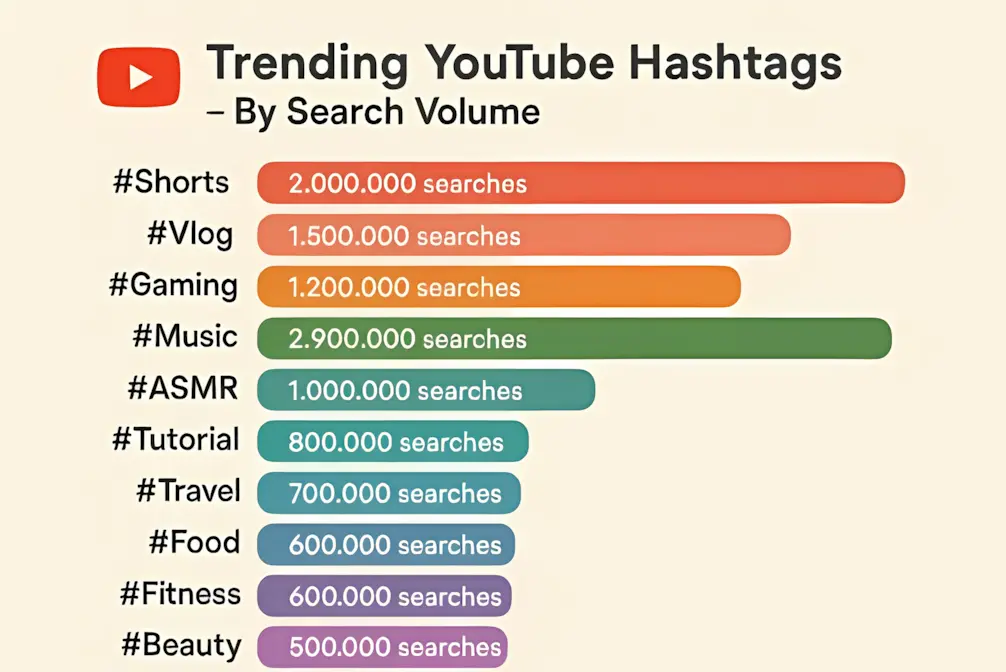
YouTube Hashtag Best Practices [2026]
1. Adapt to the Algorithmic Decoupling
YouTube’s most impactful recent decision was separating the Shorts recommendation engine from the long-form engine. Poor Shorts performance no longer drags down your long-form content and vice versa.
This means you need separate hashtag strategies:
- Shorts: Focus on trend-riding, emotional triggers, visual patterns (#ASMR, challenges)
- Long-form: Focus on long-tail keywords, deep knowledge content, documentary-style tags
2. Optimize for the “Satisfaction Score”
YouTube in 2026 has shifted from pure Watch Time to a “Viewer Satisfaction Score.” The algorithm now predicts whether a video meets viewer needs through positive interactions, surveys, and return visits.
Critical implication: If your hashtag attracts viewers but your content doesn’t deliver within the first 30 seconds, departure rates spike. The absolute alignment between hashtag, title, and actual video content is non-negotiable.
3. Clone Competitor Context
YouTube’s recommendation engine - especially for Suggested Shorts - operates on “Topic Correlation.” The system finds videos sharing metadata data points with content the user already watched and liked.
Tactical approach:
- Find a video that went viral in your niche within the last 3 months
- Use browser extensions (VidIQ or TubeBuddy) to extract their hidden tags and hashtags
- Mirror the most relevant ones in your similar content
- This feeds the system a strong signal: “This content matches the successful video’s context”
4. Build a Long-Tail Keyword Pyramid
Search queries in 2026 have become longer and more complex. Single-word targeting is insufficient in an AI-saturated environment.
Structure your hashtags from specific to broad:
- Specific long-tail (captures direct intent): #BoschDishwasherDrainingFix
- Mid-range category: #DishwasherRepair
- Broad industry: #HomeMaintenance
This graduated pyramid captures viewers with precise search intent who achieve significantly higher retention rates.
Common Mistakes to Avoid
1. Metadata Spam (Misleading Hashtags)
Putting trending hashtags unrelated to your content is the greatest technical sin. A cooking channel using #Minecraft destroys its retention curve and may get the entire channel flagged as an “unreliable data source.”
2. Broad-Only Reliance
Using only generic hashtags like #Viral, #Trending, or #Love wastes your metadata space. They’re associated with millions of videos with fierce competition and provide the AI zero useful context.
3. Copy-Pasting the Same Set
Using identical hashtag blocks across all videos is flagged as “robotic” spam behavior. YouTube may reduce reach for all channel videos as punishment. Each video’s hashtags must reflect its unique content.
4. Ignoring Analytics
Continuing to guess hashtag effectiveness without checking YouTube Studio is a fatal strategic error. Monitor Traffic Sources and CTR for every video to understand which keywords actually bring real viewers.
5. Breaking the Top 3 Rule
Since YouTube gives the greatest importance to the first 3 hashtags, placing your most important keyword in position 4, 5, or 10 is a priority engineering mistake.
YouTube Hashtag Generator - Free Tool
In the 2026 environment where recommendation systems prioritize intent and deep context, hashtag generation tools have evolved beyond old mechanisms. Legacy tools relied on lazy approaches - extracting random lists based on frequency counts, suggesting millions-of-uses hashtags like #Viral, or irrelevant suggestions that harmed creators more than helped them.
We built a completely free hashtag generator designed specifically to decode YouTube’s 2026 algorithms. Our tool doesn’t just search for “most popular” - it searches for “most relevant” to secure the correct Context Anchors that elevate the algorithmic confidence score for your videos, whether short or long-form.
The 3-Layer Approach and Golden Range rules are built directly into the tool’s engine, ensuring ready-to-use combinations free from spam classification risks.
Generate Your Hashtags Instantly - 100% Free
No signup. No payment. No limits. Powered by YouTube’s own autocomplete data.
Frequently Asked Questions
Do hashtags actually increase views and amplify video reach in 2026?
Hashtags don’t work as a magic wand for direct amplification. YouTube doesn’t read a hashtag and decide “this video deserves to go viral.” Instead, hashtags play a decisive role in precise categorization - they help the AI identify the correct “initial test audience.” If the video is tested before the right audience, retention rates climb and skip rates drop. That positive engagement is what ultimately drives the algorithm to amplify distribution. The effect is indirect but foundational to the viral process.
How many hashtags should I use to avoid looking like spam?
While YouTube technically allows up to 15 hashtags (and ignores ALL of them if you exceed this number), the proven optimal practice is staying within the golden range of 3 to 5 highly relevant hashtags. Going beyond this doesn’t increase reach - it dilutes relevance and makes the video appear random to both viewers and the algorithm.
Where is the strategically best place to put hashtags: title or description?
The strategically best and safest location is embedding all hashtags (3-5) within the description box. The first 100 characters carry doubled algorithmic weight for search engines - embed one primary hashtag there, and stack the rest at the bottom. Putting too many hashtags in the title ruins your hook and reduces CTR. If you must use title hashtags, use a maximum of 1-2 and place them at the end.
Is the #Shorts hashtag still required to classify a video as a Short?
Technically and practically in 2026: No. YouTube now relies entirely on video dimensions (9:16 vertical ratio) and duration (under 3 minutes) to automatically classify Shorts. However, using #Shorts is still recommended to link your content to the largest Short video collection on the platform - it’s just not a technical requirement for triggering the Shorts player.
What happens if I use banned or irrelevant hashtags to attract views?
This is classified as Metadata Spam. Immediately, serving your video to the wrong audience causes high swipe-away rates, telling the algorithm your content is poor and stopping all recommendations. Long-term, you may face shadow-banning or official penalties that classify your channel as a misleading data source - hampering performance of even your good future videos.
How did the 2026 algorithm update affect hashtag strategy between Shorts and long-form?
The biggest change was YouTube’s decision to fully decouple the Shorts and long-form recommendation engines. Poor Shorts performance no longer affects long-form and vice versa. Consequently, Shorts hashtags now lean toward feeding the browse/scroll algorithm (targeting emotions and trends like #ASMR), while long-form videos benefit more from highly specialized long-tail hashtags pushing videos into search results and deep sidebar recommendations.
How can I track and measure which hashtags are actually working?
Your primary reference should be YouTube Studio Analytics. Monitor “Traffic Sources” and the specific terms that led viewers to your videos. Additionally, watch for sharp drops in the first 30 seconds - if drops are high despite view counts, your hashtag likely attracted the wrong audience or created unmet expectations.
Can I save time by using the same hashtag set across all my videos?
This is a lazy practice that borders on spam. YouTube’s 2026 algorithms strictly detect repeated patterns. Using identical hashtags across every video signals automated manipulation and may cause videos to be ignored. Best practice: lock in 1-2 branded hashtags as permanent fixtures, then change the remaining 2-3 for each video to precisely describe its unique topic and details.
![YouTube Channel Comparison: Evaluate Any Two Creators for Free [2026]](/images/seo/youtube-channel-comparison/youtube-channel-comparison.webp)