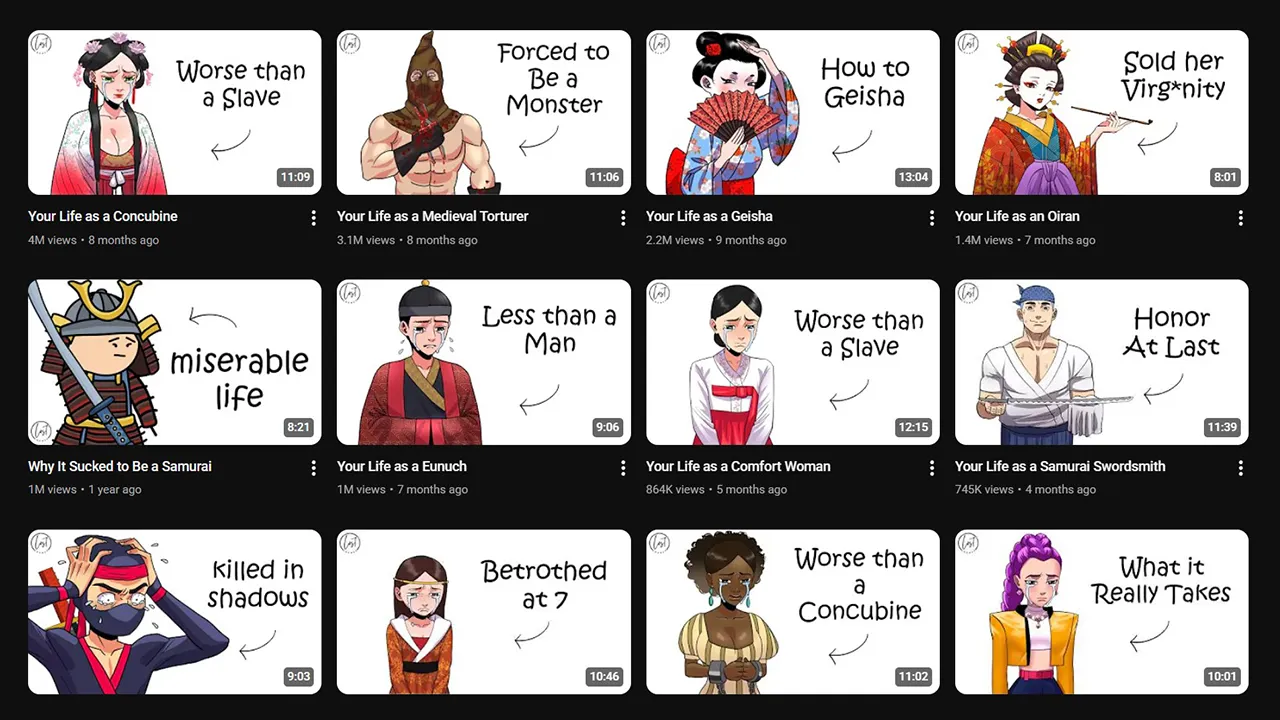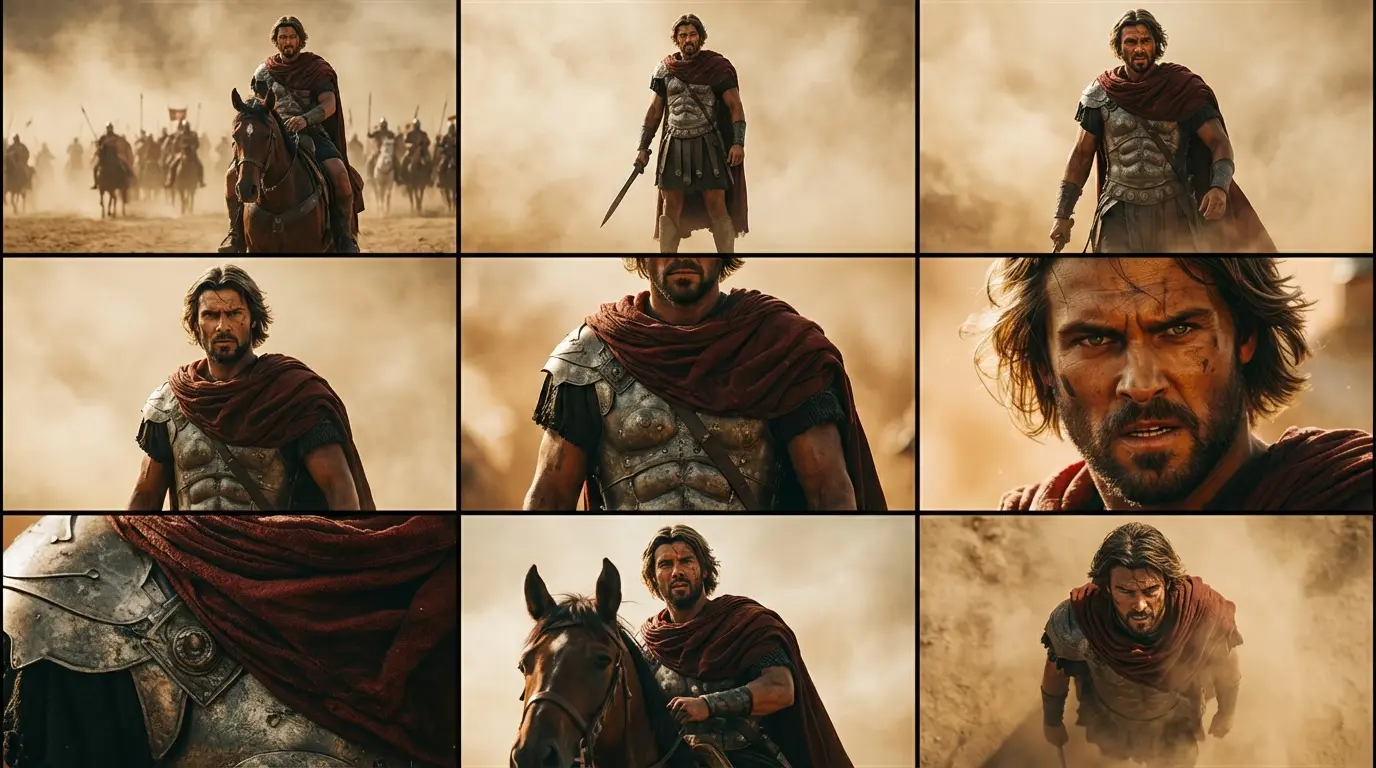
Every time the camera angle changes, the artificial intelligence changes the face. Generating a striking, perfectly designed character in a standard front-facing portrait is a common and relatively simple achievement. However, requesting that exact same character from a high angle, a side profile, or an extreme close-up often results in a completely unrecognizable identity. The clothing might remain similar, and the overall color palette might match, but the fundamental facial structure morphs into a stranger. For professionals building graphic novels, storyboards, or consistent brand assets, this persistent hallucination destroys visual continuity and renders the output virtually unusable.
Securing reliable same face different angle AI generation remains one of the most significant and frustrating challenges in modern generative media. This guide explains why it happens technically, then gives you the prompt architecture that solves it — with examples from the full 52-angle camera reference guide.
Why AI Breaks Character Consistency
The inability to maintain character consistency across varying perspectives is not a random software glitch. It is a fundamental byproduct of how diffusion models map the latent space, process model weights, and compute cross-attention mechanisms.
When a prompt introduces a specific camera angle, several underlying technical phenomena occur that actively overwrite the character’s core identity.
Perspective Bias
Generative models are trained on massive datasets that overwhelmingly feature eye-level, front-facing, or slight three-quarter portraits. Because this standard perspective forms the visual average of the dataset, the model’s weights associated with specific facial features — a sharp jawline, deep-set eyes, a specific nose slope — are heavily intertwined with a front-facing viewpoint.
Forcing a radical perspective, such as a worm’s-eye view, pushes the model into a sparser, significantly less-documented region of its mathematical latent space. Lacking sufficient data to mathematically map the original face onto this extreme geometry, the model defaults to a statistically average face that fits the new angle.
Semantic Leakage
Many creators mistakenly believe that locking the generation seed will preserve the identity. The seed merely dictates the initial distribution of static noise at the beginning of the diffusion process. The moment the text prompt is altered to request a new camera angle, the mathematical trajectory of the denoising process shifts entirely, rendering the fixed seed practically useless for spatial consistency.
This shift triggers a severe issue known as semantic leakage within the cross-attention layers. The text prompt is broken into tokens which guide the denoising process by matching descriptive words to pixels. However, the attention maps for these tokens frequently overlap. The tokens commanding the new camera angle begin to bleed into the tokens defining the character’s identity.
| Technical Constraint | Mechanism of Failure | Impact on Generation |
|---|---|---|
| Perspective Bias | Model weights default to the visual average (eye-level) of their vast training datasets. | The system hallucinates generic, average faces when forced into underrepresented geometric angles. |
| Semantic Leakage | Cross-attention tokens for camera angle bleed into character identity tokens. | The face morphs structurally to accommodate spatial instructions rather than maintaining identity. |
| Seed Instability | The seed parameter only controls the initial noise pattern, not the spatial orientation of the subject. | Changing the prompt text mathematically redirects the entire denoising pathway. |
Because of these combined factors, the AI no longer processes the face independently of the angle. The camera angle effectively hijacks the facial generation, altering the underlying identity to satisfy the structural demands of the new perspective.
Understanding how each of the 52 camera angles creates a different geometric demand on the model’s latent space is the first step. For the full reference, see the complete camera angles guide for AI prompts.
The Prompt Structure That Locks the Face
To circumvent semantic leakage and perspective bias, the generation requires a highly specific, modular architectural structure. Packing every detail into a single conversational paragraph guarantees failure. The prompt must isolate the character’s core identity from the environmental and cinematic variables.
The underlying principle requires the following syntax:
[Angle Term] + [Character Description Block] + [Consistency Anchor]Each element performs a distinct role:
- The Character Description Block must remain absolutely identical across every single generation. If a character is described as a “short-haired woman with black hair” in one frame and a “dark-haired protagonist” in the next, the model interprets two distinct latent identities.
- The Angle Term is injected first, before the identity block, so the model establishes the spatial geometry before it begins rendering facial features.
- The Consistency Anchor is a reference parameter or style lock that forces the model to weight the face description more heavily than the angle command.
For example, to generate a character consistency AI prompt for a Low Angle shot, you would start with the exact angle description, follow immediately with your locked character block, and finish with the platform’s consistency anchor.
We keep the exact prompt formulas exclusive to the Cheat Sheet because each of the 52 camera angles requires highly specific syntax, lens specifications, and lighting directions to work perfectly without breaking the face.
By locking the descriptive block in the center and establishing the camera angle at the very beginning of the prompt, the model processes the spatial geometry before it begins rendering the specific facial features.
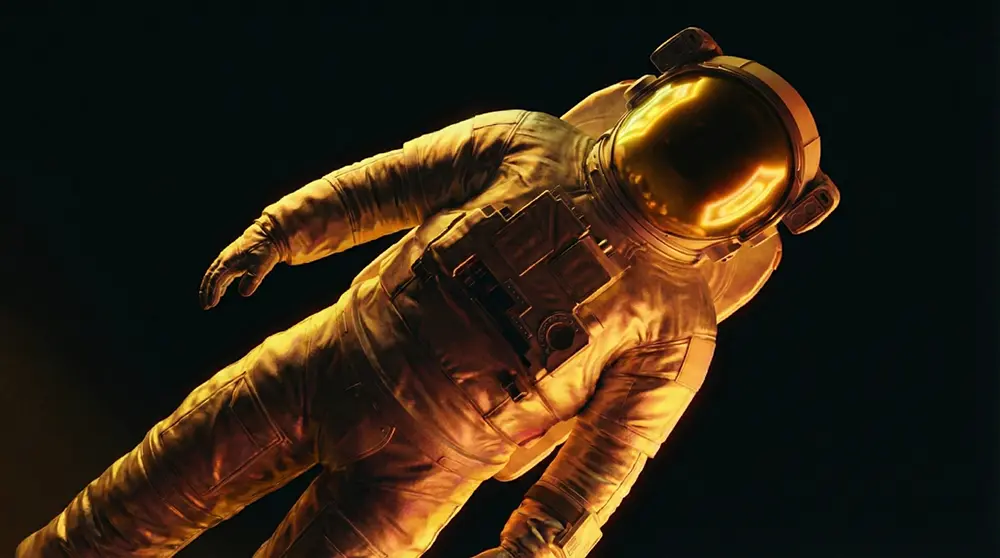
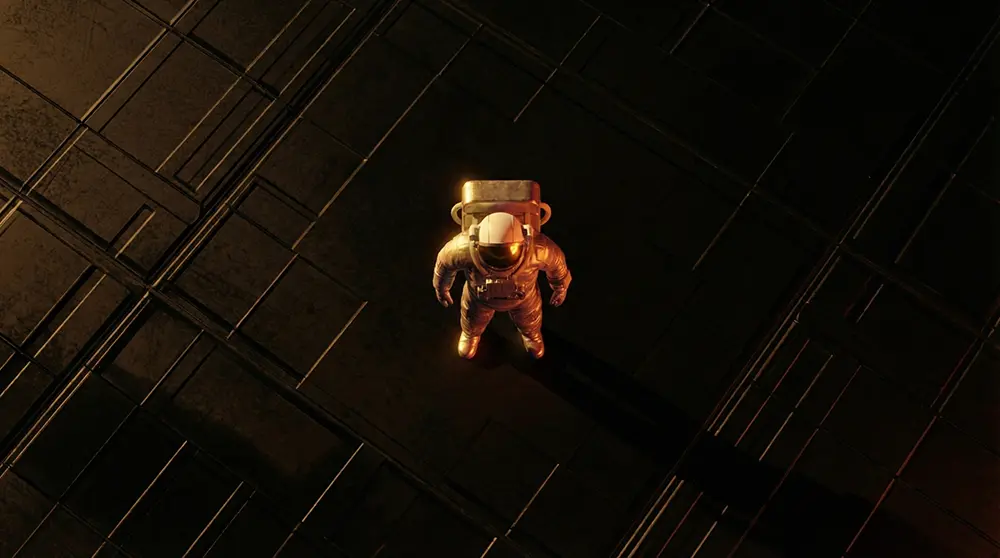
Once this structure is applied, visual continuity remains consistent regardless of perspective. Here are three examples using the exact same character after applying the isolation architecture:
Dutch Angle — same character, different geometry:
Over-the-Shoulder — same character, shifted perspective:
.jpg)
Bird’s-Eye View — same character, overhead geometry:
The exact prompt structure for all 52 angles — including the Consistency Anchor syntax for each platform — is in The AI Director’s Cheat Sheet.
Platform Differences
The isolation architecture above applies universally, but the Consistency Anchor syntax changes per platform:
- Midjourney relies on the
--cref(character reference) parameter combined with--cw 100(character weight at maximum) to lock facial identity natively. - Stable Diffusion requires rigid ControlNet workflows — specifically the OpenPose or IP-Adapter models — to anchor the latent space to a reference facial geometry.
- ChatGPT (DALL-E 3) manages continuity through iterative generation IDs and persistent session context rather than parameters.
- Flux responds best to highly weighted tag-based descriptors combined with a reference image passed in the context.
Each platform processes the same camera angle terms differently. The Cheat Sheet includes the platform-specific parameter codes for all 52 angles.
⚡ Stop guessing the syntax
The examples above show just 3 angles. The Cheat Sheet has all 52 — pre-written for every platform.
Instead of adapting the syntax yourself across Midjourney, Stable Diffusion, ChatGPT, and Flux, The AI Director's Cheat Sheet gives you the complete, platform-specific parameter codes for every cinematic angle.
Get the Cheat Sheet — $4.99 →Frequently Asked Questions
Does this work for AI video too?
Yes, though video generation introduces a secondary complexity known as temporal drift — the character’s features warp between consecutive frames due to a lack of cross-attention between temporal sequences. While the foundational prompt structure remains identical, applying this to video requires establishing anchor frames at the beginning and end of a sequence. Platforms like Google VEO 3 and KLING 3 support keyframing features and persistent visual memory protocols that force the model to interpolate a stable, consistent path between the locked camera angles.
Which tool handles consistency best?
Achieving a keep same face Midjourney generation provides the most accessible and reliable native toolset through its dedicated --cref character reference parameter — no external workflow required. However, for absolute, pixel-perfect control over complex anatomical perspectives (rendering a face accurately from a highly distorted lens angle), Stable Diffusion paired with advanced ControlNet workflows and LoRA training remains the undisputed industry standard for professional production.
Can I use —seed instead?
Relying solely on a fixed seed parameter will not preserve the face when the camera angle changes. The seed dictates the initial starting noise of the diffusion process only. The moment the text prompt is altered to request a new angle, the mathematical trajectory of the denoising process shifts completely. While keeping the same seed helps maintain general atmospheric and lighting consistency across a scene, it cannot stop the cross-attention layers from morphing the actual facial features to match the new perspective requirements.
Related Guides
- 50+ Camera Angles for AI Prompts: Complete Shot Types Guide - The complete reference for all 52 cinematic angles and their psychological impact
- How to Write Camera Angle Prompts for AI Images - The universal formula and platform syntax breakdown
- Best AI Camera Angles for YouTube Thumbnails - The 5 angles that outperform eye-level in click-through rate tests
- YouTube Thumbnail Previewer - Test how your AI-generated thumbnail looks across all YouTube surfaces before uploading