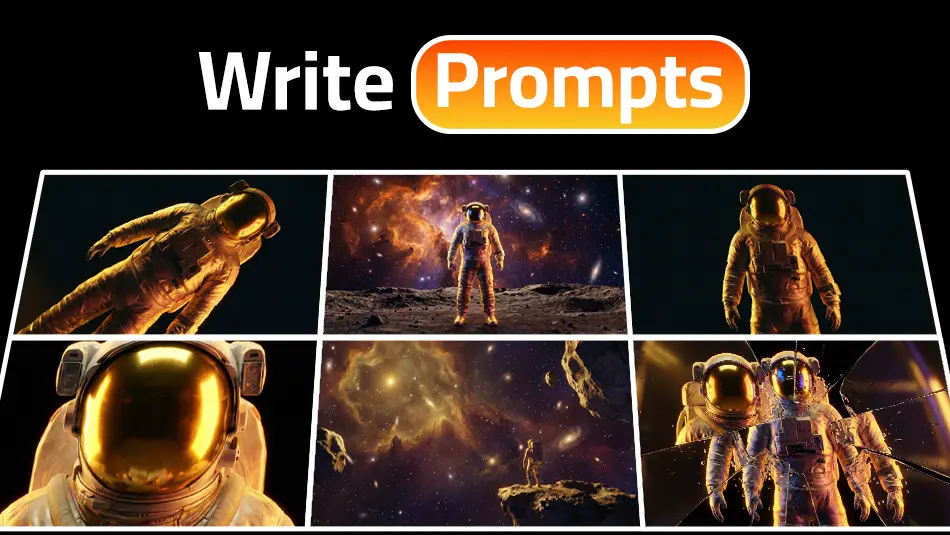
The exact same text prompt yields entirely divergent visual outputs depending on the AI platform used to generate the image. A practitioner might spend hours crafting a precise semantic string to dictate a specific dynamic perspective, only to discover that transferring that exact string into a different generative model produces a flat, generic, eye-level medium shot. This phenomenon — formally recognized as cross-platform prompt drift — represents one of the most significant architectural hurdles in professional AI image generation.
The structural integrity of a generated image — specifically its camera angle, focal length, spatial hierarchy, and depth of field — is exceptionally volatile because different text-to-image models interpret syntactic structures, spatial relationships, and aesthetic token weights through fundamentally distinct algorithmic architectures. Understanding the exact formula for camera angle prompts, and how the syntax changes per platform, is the definitive key to establishing control over virtual cinematography.
For the full reference of all 52 camera angles and their psychological impact, see the complete AI camera angles guide. This article focuses on the structural formula and the platform-specific translation layer.
The Core Problem: Passive Descriptions Fail
The core problem stems from the tendency of human operators to interact with text-to-image models as though they are human collaborators rather than probabilistic mathematical engines. When a prompt is constructed loosely — relying on the model’s latent judgment to automatically supply atmosphere, perspective, or dramatic composition — the final output is completely surrendered to the model’s baseline training biases and statistical priors.
Certain architectures are engineered to prioritize aesthetic beauty over literal adherence to the text, actively overriding the requested camera angles to produce a more visually pleasing composition. Conversely, other models prioritize strict adherence to textual input, resulting in highly accurate but potentially sterile spatial arrangements if the prompt lacks sufficient environmental context.
To achieve true, deterministic control over virtual cinematography, the practitioner must cease writing passive descriptions of scenes and instead construct rigid, sequential architectural blueprints that the model cannot algorithmically ignore.
The Universal Camera Angle Formula
To construct a visual sequence that establishes accurate physical geometry and deliberate framing, the virtual camera’s position in space must be dictated precisely at the cognitive onset of the generation process. Across all major text-to-image models, regardless of their underlying text encoder or diffusion mechanism, the most consistently effective methodology is a strict, sequence-based structural formula.
Because diffusion models process text tokens sequentially — inherently allocating the highest mathematical attention weights to the terms located at the beginning of the string — the visual hierarchy of the prompt directly dictates the physical structural hierarchy of the rendered image.
The foundational architecture for reliable virtual photography relies on the following universal sequence:
[Angle] + [Shot Size] + [Subject] + [Context] + [Lighting]The strategic placement of the camera angle and shot size in the primary position of the prompt string is a non-negotiable structural requirement. If the primary subject is described before the camera position is established, the diffusion model immediately begins solidifying the pixel geometry of the subject within the latent space, typically defaulting to a standard eye-level perspective based on the overwhelming statistical average of its visual training data.
By forcing the algorithm to parse the angle and shot size before it even possesses the semantic tokens defining the subject, the generative engine is mathematically forced to build the spatial grid, calculate the perspective lines, and establish the depth-of-field parameters first. Consequently, it must render the subject matter within that predefined, inescapable volumetric space.
Before and After: The Formula in Action
Before applying the formula:
A photograph of a businesswoman sitting in a modern corporate lobby reviewing documents, highly detailed and professional.
After applying the formula:
[Angle] [Shot Size] of a businesswoman sitting in a modern corporate lobby reviewing documents, [Context], [Lighting].
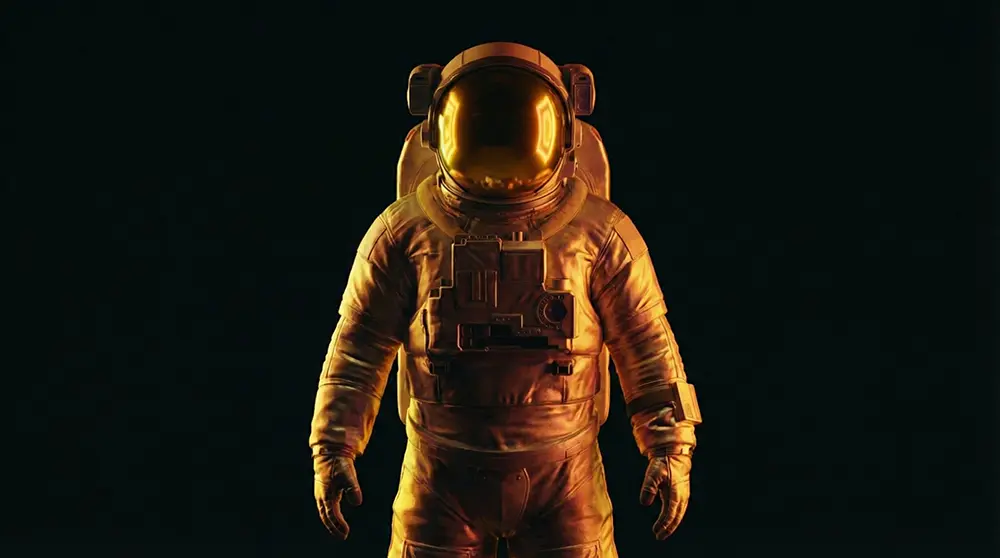
The core theoretical principle demonstrated here is that the syntax sequence itself acts as a containment field for the model’s algorithmic creativity. By inserting a specific spatial relationship (the angle) and a framing constraint (the shot size) before introducing the noun, the practitioner completely removes the model’s ability to guess where the camera should be placed.
The precise lens specifications in millimeters, the exact degrees of camera tilt, and the exact directional origin of the light sources are deliberately abstracted here. Those are the variables that differ across the 52 angles in the Cheat Sheet — each angle requires its own specific optical physics to work correctly.
How Each Platform Reads Camera Angle Terms
Because different image generation engines utilize vastly different text encoders — ranging from OpenAI’s CLIP architecture to massive Large Language Models like the T5xxl text encoder — the same structural formula must be syntactically translated for each specific platform to yield the desired geometric result. A comma-separated list of highly technical photographic tags might yield a flawless cinematic masterpiece on one system, yet produce a garbled, geometrically entangled failure on another.
The following matrix delineates the core principles governing how the four major generative platforms process camera directives, focusing strictly on their algorithmic syntactic logic rather than functioning as a repository of exact prompts:
| Aspect | Midjourney | Stable Diffusion | ChatGPT | Flux |
|---|---|---|---|---|
| Syntax style | Natural language | Weighted tokens (term:1.3) | Conversational prose | Tag-based narrative |
| Parameter control | --style raw + --s 50 | CFG scale 7-12 | System prompt manipulation | Steps 40-50, guidance 2.5-3.5 |
| Combining angles | Space-separated | Comma + weights | Describe naturally | Comma-separated descriptors |
| Strongest with | Artistic angles | Technical precision | Context-rich descriptions | Photorealistic angles |
| Negative prompts | Not supported | Essential for geometry | Not applicable | Not supported |
| Biggest risk | Aesthetic override of literal angles | CFG over-saturation above 15 | LLM translation layer rewrites | Flat output without explicit physics |
Understanding the cognitive logic outlined in this matrix is the definitive key to unlocking cross-platform proficiency and preventing prompt drift. The primary divergence between the leading generative models is not their inherent capability to render a complex perspective, but rather the specific syntactical dialect they mathematically require to trigger that latent rendering capability.
⚡ Four platforms. Four dialects.
Instead of memorizing 4 different syntaxes, the Cheat Sheet has all 52 angles pre-formatted for every platform.
Each angle includes the exact lens specifications, CFG recommendations, and platform-specific parameter codes — ready to copy and paste.
Get the AI Director's Cheat Sheet - $4.99 →How Each Platform Processes Camera Directives
Midjourney: Aesthetic Bias and Raw Parameter Control
Midjourney operates on an inherently opinionated algorithmic architecture. By default, the model applies a heavy aesthetic bias to all generations, prioritizing cinematic lighting, dramatic contrast ratios, and idealized artistic compositions regardless of whether those specific elements were requested. While this aggressive aesthetic tuning consistently produces beautiful images, it acts as a detrimental barrier when precise, clinical camera angle control is required.
To force Midjourney’s architecture to respect literal camera angle directives, practitioners must utilize the --style raw parameter. This functions as a critical algorithmic override mechanism, explicitly commanding the generative engine to dial back its default artistic embellishments and process the textual input with strict literalism. Combining --style raw with a low stylize value such as --s 50 strips away almost all secondary algorithmic interference.
When combining multiple spatial concepts within Midjourney, natural language phrasing separated by spaces is algorithmically preferred over dense comma-separated lists. However, when a specific camera angle must heavily outweigh the subject in the attention mechanism, the multi-prompt weighting system using the double-colon syntax can be tactically deployed to manually force the model’s text encoder to prioritize spatial arrangement over physical rendering.
Stable Diffusion: Mathematical Precision and Token Weighting
In stark contrast to Midjourney’s intuitive aesthetic bias, Stable Diffusion models function as literal mathematical engines that respond optimally to highly structured, tag-based prompting methodologies. Stable Diffusion architectures do not attempt to interpret the emotional mood or cinematic implications of a camera angle; they scan the prompt for specific, isolated tokens that statistically correlate with geometric configurations in their training datasets.
The primary mechanism for dictating camera angles in Stable Diffusion is the direct manipulation of token weights. If the diffusion model ignores a specific perspective directive due to the overpowering presence of other semantic elements, the prompt engineer must bracket the specific camera term and apply a numerical multiplier: (term:1.3). This explicit syntax commands the text encoder to allocate precisely 30 percent more mathematical attention to the specified angle during the iterative denoising process.
Successful execution of complex camera angles in Stable Diffusion is entirely dependent on meticulous management of the Classifier-Free Guidance (CFG) scale. A mid-range CFG between 7 and 12 is generally the optimal threshold, balancing prompt adherence with structural image stability. When forcing extreme, unnatural camera angles, a CFG between 12 and 15 may be required to force the model out of its comfort zone. However, excessive CFG scaling beyond these thresholds causes geometric entanglement, resulting in severe color oversaturation, contrast artifacts, and structural breakdown.
ChatGPT and DALL-E 3: The Conversational Translation Layer
DALL-E 3 is built natively on top of the ChatGPT infrastructure, meaning a highly advanced Large Language Model acts as a mandatory conversational translation layer between the user and the image generator. When a practitioner inputs a prompt featuring a specific camera angle, the LLM intercepts the text string, analyzes the perceived intent, and autonomously rewrites the prompt into a highly descriptive narrative paragraph before passing those revised tokens to the actual image generation engine.
This unique architecture dictates that traditional prompt engineering tactics used in Stable Diffusion — such as token weighting or comma-separated lists of tags — are entirely ineffective and frequently counterproductive. To control the camera angle effectively in this ecosystem, the practitioner cannot simply demand a “high angle”; they must describe the physical space, the specific relationship between objects, and the exact physical position of the viewer in highly descriptive conversational prose.
Because DALL-E 3 treats each generation as completely independent, it is exceptional for single, precise spatial visualizations but challenging for sequential storytelling from multiple angles.
Flux: Uncompromising Literalism and Spatial Context
The Flux family of models utilizes a massive T5xxl text encoder paired with a rectified flow transformer architecture. This structural foundation results in a generative model that processes human language with an unprecedented degree of literalism and holistic spatial awareness. Unlike Stable Diffusion, Flux completely ignores all forms of weighted token syntax; constructions utilizing parentheses, numerical multipliers, or emphasis markers do absolutely nothing to alter the attention mechanism and are actively disregarded. Furthermore, Flux fundamentally does not support negative prompts.
To successfully engineer precise camera angles in Flux, the prompt must be meticulously constructed in a tag-based format that leans heavily on descriptive, grammatically complete narrative structure. The model evaluates spatial relationships continuously across the entire context of the prompt string rather than viewing words as isolated tags.
Because Flux lacks Midjourney’s default aesthetic bias, a failure to explicitly define the camera angle, lens physics, and atmospheric lighting will result in a severely flat, structurally boring image. The model strictly requires the practitioner to dictate the exact parameters of the virtual camera to achieve photorealism. When generation steps and guidance scales are fully exposed, research regarding condition-degradation guidance indicates that a low guidance scale between 2.5 and 3.5, combined with a robust step count between 40 and 50 iterations, yields the highest degree of camera angle adherence without sacrificing photorealistic fidelity.
The 3 Most Common Camera Angle Prompt Mistakes
These mistakes account for the vast majority of failed angle executions regardless of platform:
Mistake 1: Placing the angle after the subject. Writing “a warrior in a forest, low angle shot” gives the model the subject first. By the time it processes the angle token, the warrior’s geometry is already solidified in the latent space at eye-level. The angle becomes a weak override rather than a structural constraint. The formula requires angle first, always.
Mistake 2: Confusing angle order in the token string. There is a meaningful algorithmic difference between “close-up low angle” and “low angle close-up.” The first token in the pair receives higher attention weighting. For maximum control over the camera height, “low angle” must lead.
Mistake 3: Overloading the prompt with quality tokens. Injecting excessive quality boosters such as “8k, masterpiece, trending on artstation, award-winning” into an already complex spatial prompt fragments the attention mechanism. The model abandons complex spatial instructions and defaults to its strongest statistical priors to salvage a recognizable image. Strip the noise; let the angle tokens dominate the primary attention allocation.
Optical Physics: Why Focal Length Matters
Commanding an AI model to adopt a specific camera angle is only half of the geometric equation. The stated angle must be intimately paired with specific lens physics to achieve realistic spatial depth and environmental scaling.
Focal lengths explicitly dictate the field of view and the degree of spatial compression:
-
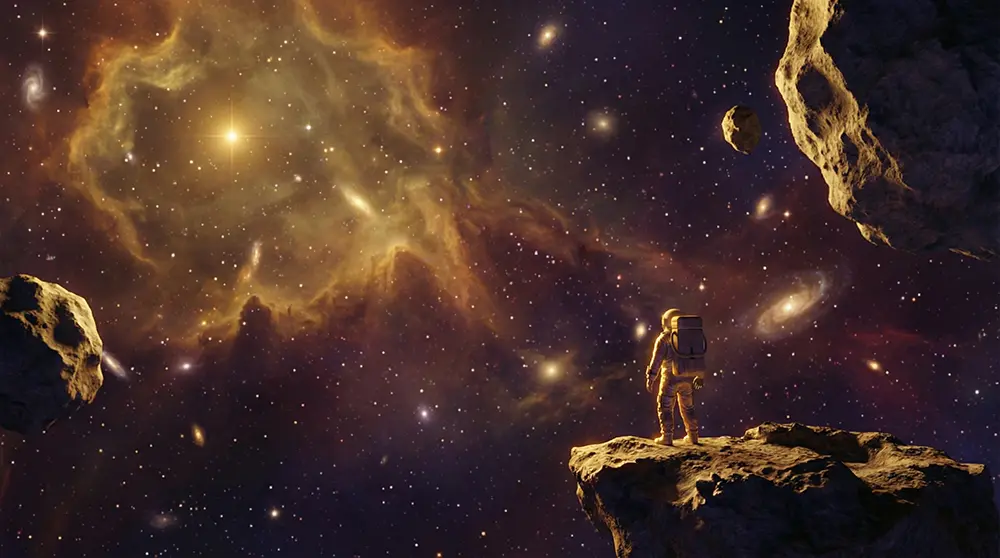
Ultra-wide (14-24mm): Forces a massive field of view while mathematically distorting the extreme edges of the frame. Maximizes the drama of perspective lines and converging vanishing points — ideal for extreme low angles and bird’s-eye views.
-
Standard (35-50mm): The cinematic standard, balancing subject focus with natural, undistorted environmental context. The most stable choice when combining multiple spatial elements.
-
Telephoto (85-135mm): Aggressively compresses visual space, physically flattening the perceived distance between the subject and the background. Neutralizes dramatic perspective lines, making it optimal for portrait isolation but detrimental for showcasing architectural depth.
The inclusion of specific aperture settings in f-stops directly dictates the depth of field applied to the spatial geometry. A low f-stop such as f/1.4 forces the diffusion model to aggressively blur the background geometry, creating a shallow plane of focus that visually isolates the primary subject. A closed aperture like f/8 commands the model to maintain crisp edge detection across all planes of depth, essential for product photography and landscape angles where total environmental clarity is required.
The exact lens specification for each of the 52 camera angles is precisely what makes the Cheat Sheet worth having. Guessing focal lengths for 52 different perspectives is where most practitioners lose hours. The Cheat Sheet has the correct millimeter value, f-stop, and CFG recommendation pre-calculated for every single angle.
Overcoming Geometric Entanglement
Geometric entanglement occurs when a diffusion model conflates multiple spatial commands, resulting in images plagued by impossible geometry, merged anatomical features, or heavily warped perspectives. This failure mode is exceptionally common when forcing extreme camera angles without the correct structural syntax.
When an AI model struggles to reconcile a camera angle with a specific action or subject orientation, it is fundamentally because the mathematical vectors within the latent space are pulling the iterative denoising process in opposing directions. For example, explicitly requesting a subject to look directly into the camera lens while simultaneously requesting a strict profile camera angle presents a geometric impossibility. The model will desperately attempt to fulfill both weighted requests simultaneously, resulting in severely distorted facial features or a completely fractured composition.
To systematically mitigate geometric entanglement:
- Stable Diffusion: Use targeted negative prompt exclusions to prevent the model from collapsing the intended perspective by mathematically walling off the latent space that leads to contradictory angles.
- Flux and DALL-E 3: Rely exclusively on positive reframing. Explicitly describe the exact position of the subject’s gaze, the specific orientation of their posture, and their relationship to the environment in direct relation to the camera’s physical position in space.
- All platforms: Actively limit the overall token count and adhere strictly to the universal camera angle formula. When prompts become overloaded with excessive adjectives and redundant quality boosters, the model’s attention mechanism becomes fragmented and abandons complex spatial instructions.
Frequently Asked Questions
Which AI tool understands camera angles best?
Midjourney delivers the most aesthetically polished results when raw mode is disabled, making it ideal for creative and atmospheric angles. For absolute geometric precision and technical control, Stable Diffusion with ControlNet workflows is the professional standard. ChatGPT (DALL-E 3) is unparalleled for rendering legible typography that aligns with vanishing points. Flux delivers the most literal, photorealistic execution of complex spatial directives when the prompt is correctly structured.
Do I need different prompts for AI video vs. AI images?
The universal formula and angle terminology are transferable to AI video platforms like Google VEO 3 and KLING 3. However, video introduces temporal consistency requirements that demand anchor frames, keyframing, and additional parameters to prevent perspective drift between frames. The foundational angle syntax remains identical; the motion layer requires additional structural controls.
Can I combine two camera angle terms in one prompt?
Combining angles is one of the most powerful techniques in AI image generation. Examples: “Low Angle Close-Up” merges power with intimacy. “Dutch Angle Wide Shot” combines tension with scope. “Worm’s-Eye View Medium Shot” creates dramatic perspective. The key constraint is that the combined terms must describe a geometrically coherent position in physical space — combining contradictory angles like “Bird’s-Eye View” and “Low Angle” simultaneously requests a physical impossibility and will result in entanglement.
Why does the same prompt produce different results on different days?
Diffusion model outputs are non-deterministic by default. Small changes in server load, model updates, or random seed variation cause drift. To achieve reproducibility, lock the seed parameter in your generation settings. Note that fixing the seed controls the noise starting point but does not guarantee identical results when the prompt is altered, as discussed in the character consistency guide.
Related Guides
- 50+ Camera Angles for AI Prompts: Complete Shot Types Guide - The complete reference for all 52 cinematic angles and their psychological impact
- How to Keep the Same Face Across Different AI Camera Angles - See this formula applied to the hardest problem in AI generation: character consistency
- Best AI Camera Angles for YouTube Thumbnails - The 5 angles that outperform eye-level in click-through rate tests
- YouTube Thumbnail Previewer - Test how your AI-generated thumbnail looks across all YouTube surfaces before uploading