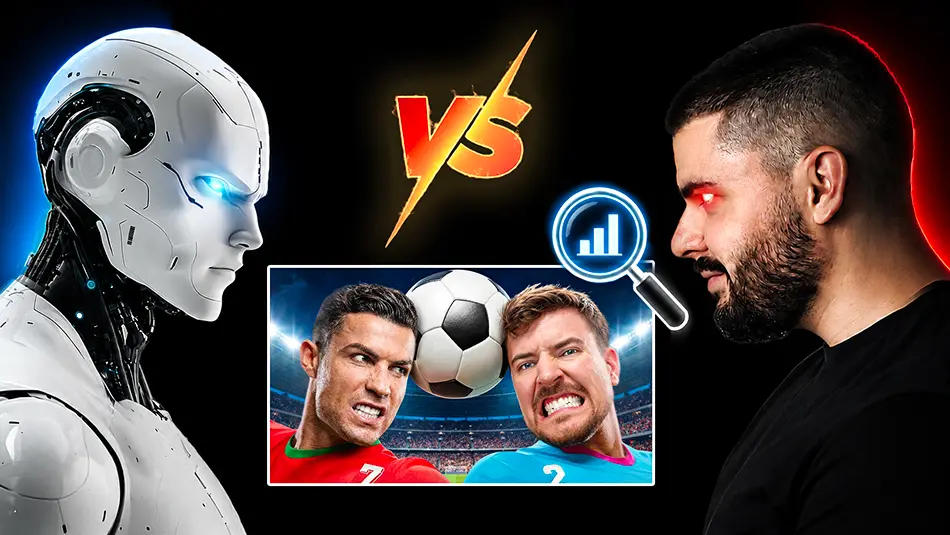
When a YouTube creator finishes designing a thumbnail, they face a critical question: how do you know if it will actually get clicked? Two fundamentally different approaches have emerged to answer that question - AI thumbnail analyzers that score your design algorithmically, and community thumbnail testing that relies on real human votes. This guide explains what separates them, where each one fails, and which approach gives you the stronger signal before you publish.
Already familiar with the basics? Our complete guide to YouTube Thumbnail A/B Testing covers the full methodology, tools comparison, and step-by-step walkthroughs.
How AI Thumbnail Analyzers Actually Work
The digital content ecosystem has seen a rapid proliferation of computer vision tools designed to evaluate video packaging before publication. An AI thumbnail analyzer operates by deconstructing an image into a set of quantifiable, machine-readable metrics rather than experiencing the visual as a human viewer would.
These algorithms scan for structural integrity, measuring pixel-level color contrast, vibrancy, and visual hierarchy. A primary function of any standard YouTube thumbnail analyzer is to evaluate text readability, ensuring that font choices and color combinations remain legible when downscaled to mobile device dimensions. Advanced models employ facial recognition technology to detect the presence of human faces and categorize the simulated emotional resonance, looking specifically for highly clickable expressions such as joy, shock, or anger. By aggregating these technical checks - including 1280x720 resolution validation and adherence to the 16:9 aspect ratio - the AI calculates an overall thumbnail rating designed to estimate potential click-through rate (CTR).
A robust market of software platforms has emerged to commercialize this diagnostic approach. The table below outlines several prominent tools that utilize AI to evaluate and generate thumbnail scores:
| Tool Name | Core Analytical Focus | Key AI Features |
|---|---|---|
| Mediacube | Policy compliance and technical baseline | Analyzes thumbnails for monetization signals, community guideline violations, and foundational design rules |
| Thumbmagic | Generative design and face detection | Clones viral design frameworks, automatically selects optimal facial expressions from video frames, adapts to niche-specific brand identities |
| Oona | Multivariate technical scoring | Outputs a radar-style visualization scoring five dimensions: Emotion, Clarity, Contrast, Composition, and CTR Potential |
| TubeBuddy ThumbnailTester | Visual attention and heatmaps | Predicts viewer eye-tracking behavior to show where visual attention concentrates, ensuring faces and text are placed optimally |
The Blind Spot: What AI Scores Cannot Measure
Cultural Context and Trend Awareness
Despite their capacity to process vast amounts of historical data, an AI thumbnail analyzer fundamentally operates in a cultural vacuum. Artificial intelligence algorithms do not possess real-time awareness of internet subcultures, shifting viewer expectations, or the fast-moving trends that dictate engagement within specific niches. An AI model trained on broad, historical datasets has no mechanism for understanding an inside joke, a highly contextual gaming reference, or a meme format that gained viral traction only days prior.
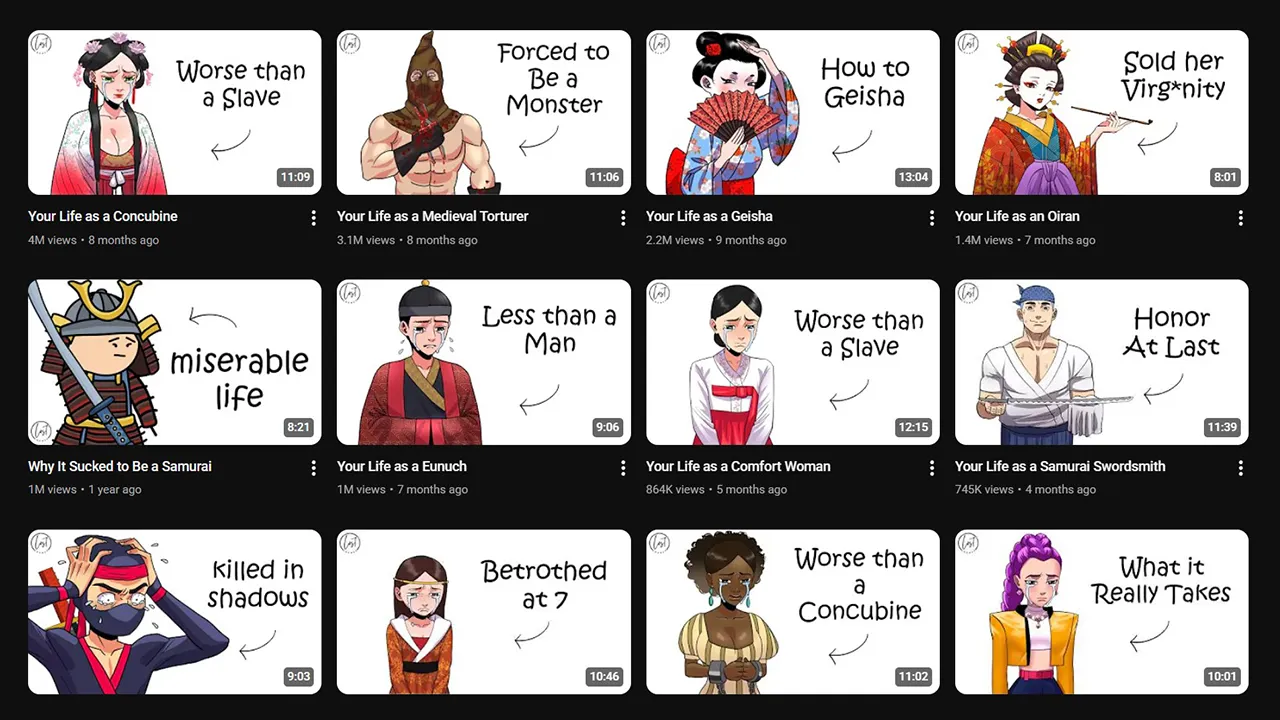
This limitation becomes acutely apparent when evaluating unconventional packaging. A creator might design an intentionally chaotic, meme-style thumbnail that utilizes distorted imagery and low-resolution assets to align with a specific internet subculture. When passed through a machine-learning filter, this design will receive a disastrously low thumbnail rating. The AI will flag the image for poor composition, weak image sharpness, and a lack of clear emotional categorization. However, when presented to the actual target demographic, that same thumbnail can generate a massive CTR precisely because its irony and cultural relevance resonate deeply with human viewers. The algorithm measures aesthetic compliance, but viewers click based on cultural meaning.
“Scroll-Stopping” Appeal Is Subjective
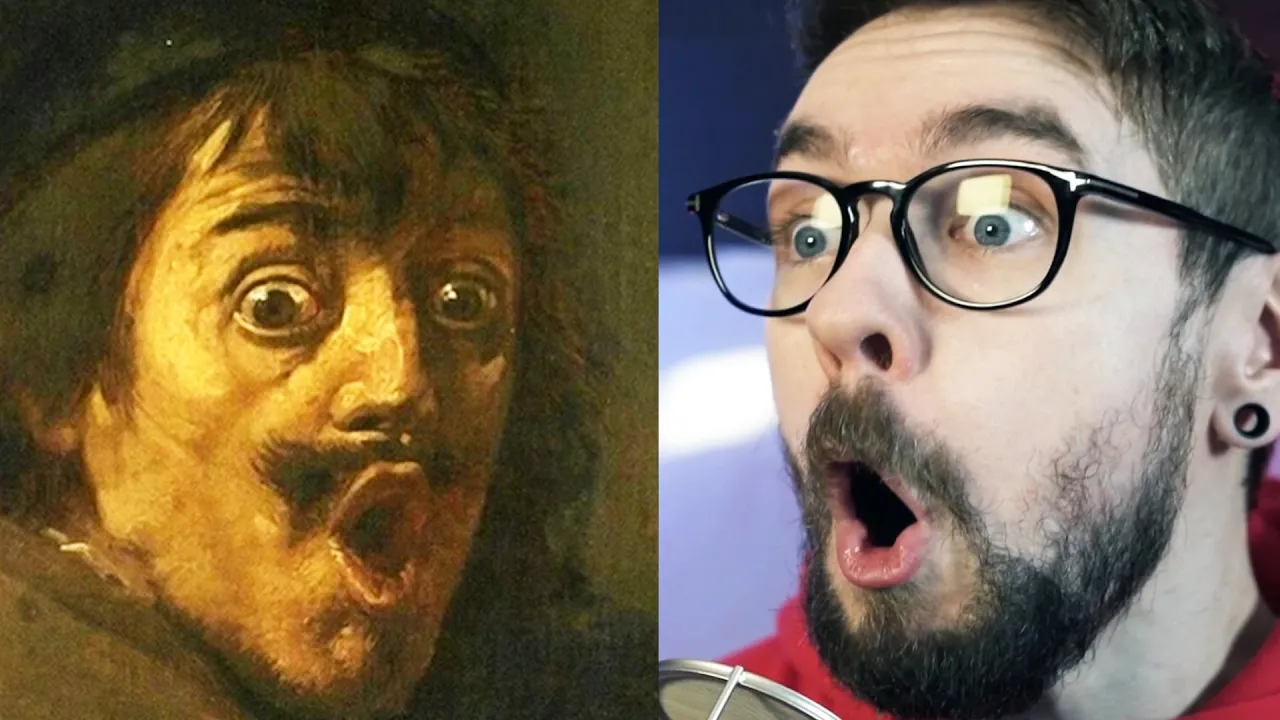
The psychological mechanism that causes a viewer to halt their scrolling and click on a video relies heavily on the “curiosity gap.” This phenomenon is entirely subjective and depends on how effectively the visual information creates an unanswered question in the viewer’s mind. What captures attention is not simply bright colors or clear text, but the specific context in which the image is viewed. A thumbnail that perfectly explains the entire video might score a 10/10 for clarity in an AI analysis, but a human will scroll past it because there is no mystery left to solve.
Crucially, AI tools generate their scores by evaluating a thumbnail in total isolation. In the real world, viewers never see a thumbnail in a vacuum - they view it dynamically against a highly competitive feed. If an AI tool recommends utilizing maximum contrast and neon backgrounds, and every creator in a niche follows that algorithmic advice, the resulting feed becomes a uniform wall of neon. In that specific context, a muted, minimalist thumbnail becomes the “scroll-stopping” anomaly. Human attention is captured by contrast relative to the immediate environment - a contextual variable that a machine evaluating a single image cannot simulate.
What Community Thumbnail Testing Actually Means
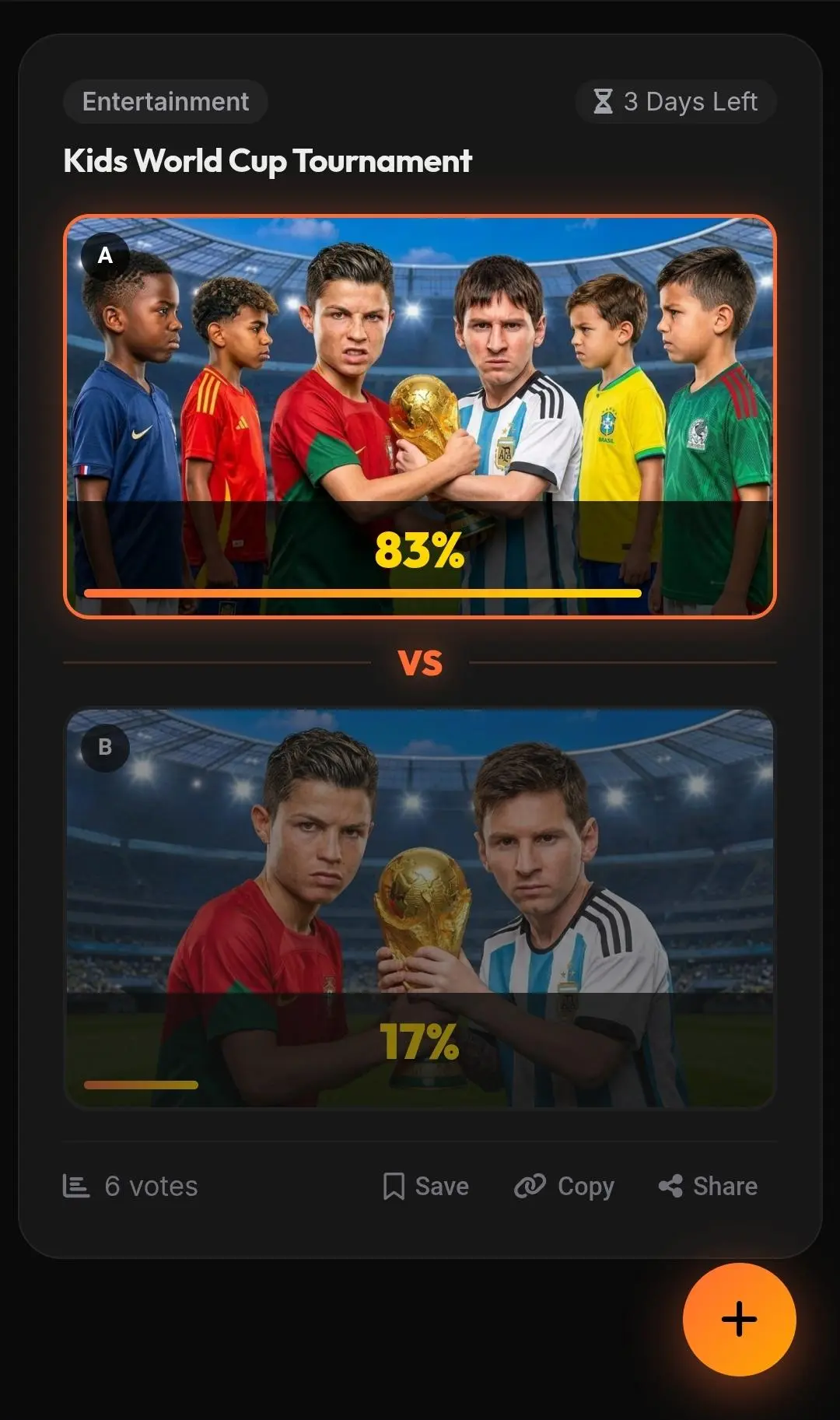
Community thumbnail testing represents a fundamental shift away from algorithmic estimation toward empirical human validation. Instead of relying on a machine to guess viewer behavior based on pixel density, community thumbnail testing involves presenting multiple design variations to a live sample of real people before a video is published. Participants evaluate the options and cast a vote for the variant that most effectively compels them to click. This methodology relies on the raw, split-second instinct that drives actual human browsing behavior, providing creators with both qualitative context and quantitative preference data.
The implementation of this concept by platforms like Touhfa Arena demonstrates the power of uninfluenced human data. Touhfa Arena facilitates this process by utilizing real users to cast real votes, generating authentic statistical percentages. The critical mechanism in this implementation is “blind A/B voting.” When users enter the Arena to evaluate thumbnails, they are forced to make their selection before they can view the current vote tally or read the opinions of other participants. This prevents consensus bias and groupthink from contaminating the results, ensuring that every vote accurately reflects a genuine, isolated YouTube impression.
Why Real Viewer Votes Are a Stronger CTR Signal
Human votes provide a significantly more accurate predictive signal for CTR because human beings evaluate thumbnails using the exact same cognitive processes they apply when browsing a platform. When an individual looks at an image, they instantly process the narrative conflict, determine if the subject matter aligns with their interests, and evaluate whether the text opens a compelling curiosity gap. Artificial intelligence measures the brightness of a face, but humans measure the intrigue of the story.
Furthermore, community voting creates a highly effective “pre-upload audience testing” environment that algorithms and native platform tools cannot replicate. While native features like YouTube’s Test and Compare are statistically powerful, they execute live A/B tests on active video traffic. If a creator tests a poorly performing variant on live traffic, it actively damages the video’s crucial first 24 hours of algorithmic momentum. Community testing solves this by identifying the statistical winner before the video ever goes live, ensuring the upload hits the platform with maximum velocity.
The specific advantages of relying on real human votes over AI scoring include:
- Validates the Curiosity Gap: Human voters instinctively know if a thumbnail creates a psychological need to watch the video, confirming that the visual promise and the text work together to leave an unanswered question
- Tests Title and Thumbnail Synergy: Viewers read thumbnails in tandem with the title. Community voters evaluate how these elements interact, ensuring they do not redundantly state the exact same information
- Captures Niche Aesthetics: Real viewers possess the cultural fluency to appreciate irony, niche humor, and emerging visual trends that AI models inherently misinterpret as design flaws
- Eliminates Groupthink: By utilizing blind voting mechanisms, the community testing environment mirrors a solitary browsing experience, yielding uncorrupted data based solely on individual visual processing
- Protects Algorithmic Momentum: Pre-upload testing identifies the highest-converting asset before publication, safeguarding the critical initial surge of impressions required to trigger broader platform distribution
Where AI Tools Still Genuinely Help
Technical Quality Checks
While artificial intelligence falls short in evaluating psychological resonance and cultural nuance, it remains an indispensable asset for objective, technical quality control. An AI analyzer excels at establishing a rigorous baseline of design hygiene. These systems can instantly calculate whether color combinations meet necessary contrast thresholds, ensuring that text does not become an illegible blur when viewed on smaller mobile screens. They reliably enforce foundational specifications, verifying that the image maintains a high-fidelity 1280x720 resolution and avoids critical “dead zones” where UI elements like duration badges might obscure important visual information.
Speed and Convenience
The most significant operational advantage of AI software is absolute velocity. In high-volume content production workflows, waiting hours or days to accumulate a statistically significant sample size from a human community test can create logistical bottlenecks. AI provides instantaneous feedback. A designer can upload a raw concept and receive a detailed, algorithmic breakdown of color saturation and facial framing within seconds. This speed enables creators to rapidly iterate through multiple rough drafts, swiftly identifying and discarding structurally flawed concepts before committing time to final refinements.
The Hybrid Workflow: Use AI to Filter, Use Humans to Decide
To maximize the probability of achieving an elite click-through rate, the most effective strategy eliminates the false dichotomy of choosing between machines and humans. The modern standard relies on a hybrid workflow that sequences the strengths of both systems to create a foolproof packaging pipeline.
Step 1 - Technical Filter (AI): Run all initial thumbnail concepts through an AI analyzer to establish a technical baseline. Before any design is presented to a human audience, it must pass the objective criteria evaluated by the machine. The AI serves as a high-speed filter, verifying that the text is mathematically legible at mobile dimensions, the contrast is sharp, and the resolution is platform-compliant. Any variant that fails this automated technical check is immediately revised or discarded.
Step 2 - Psychological Validation (Human): The thumbnail variants that successfully pass the initial AI filter are submitted to a blind community vote for the real test. Because the AI has already guaranteed that all options are structurally flawless, the human voters are left to decide the only metric that dictates success: which technically sound design triggers the strongest emotional response and curiosity.
This represents the recommended workflow for serious content strategists. By utilizing artificial intelligence to filter out objective errors and deploying human community voting to determine the final subjective appeal, creators ensure their video packaging is both mathematically optimized and culturally potent.
Ready to apply this workflow? Start a free blind community vote on Touhfa Arena - no account required, results in hours, not days.
Frequently Asked Questions
Can AI really predict YouTube CTR?
No AI tool can predict YouTube CTR with absolute accuracy because algorithms cannot experience the psychological “curiosity gap” or comprehend cultural context. While AI is highly effective at scoring the structural and technical components of an image - such as contrast, safe zones, and text legibility - it evaluates the image in isolation. A thumbnail that achieves a perfect AI score may fail to generate clicks if the underlying concept is uninteresting, whereas a technically flawed image may go viral due to cultural relevance. AI predicts technical compliance; only human behavior predicts click intent.
How many votes do I need for a reliable community test?
The volume of votes required depends on the variance between the thumbnail designs. While live platform A/B testing often requires thousands of impressions to confidently separate a winning variant from random noise, pre-upload community tests can provide a clear directional consensus with a much smaller sample. If the variants test distinctly different concepts (for example, a close-up face versus a wide-shot landscape), a sample of 50 to 100 blind votes is typically sufficient to reveal which psychological angle resonates most strongly. If the variants feature only minor tweaks, a significantly larger sample is required to detect the marginal difference.
Is community testing free?
Yes, community testing can be entirely free for creators. While enterprise-grade usability platforms that recruit targeted demographic panels often charge premium monthly fees, the creator ecosystem has developed accessible alternatives. Peer-to-peer feedback mechanisms and platforms built specifically for blind A/B voting - such as Touhfa Arena - allow creators to gather data without financial cost. By distributing shareable voting links to their existing audience or within niche communities, creators can execute rigorous tests at zero expense.
Related Guides
- YouTube Thumbnail A/B Testing: Complete 2026 Guide - The full pillar guide covering all methods, tools, CTR benchmarks, and step-by-step walkthroughs
- YouTube Test & Compare vs Free Community Testing - When to use YouTube’s native tool vs pre-publish community voting, and why the best answer is both
- 8 Best YouTube Thumbnail A/B Testing Tools in 2026 - Full comparison of every major tool from free community voting to $75/month enterprise platforms