At the highest echelons of YouTube content creation, video packaging is treated as a science, not an art. Large channels consistently treat thumbnail design as a core operational protocol - not an afterthought. This guide breaks down exactly how they do it, why it matters, and how any creator with zero budget can replicate the same pre-publish feedback loop for free.
Want the complete methodology? Start with the full guide: YouTube Thumbnail A/B Testing: Free Community Voting and Tools 2026
Why Big Channels Never Publish a Thumbnail Without Testing It First
The stakes for video packaging at the highest echelons of digital content creation are monumental. YouTube’s algorithm utilizes click-through rate (CTR) as a primary signal for content quality and relevance - a video with a high initial CTR explicitly signals to the algorithm that viewers demand the content, triggering broader distribution across home feeds and search results.
At the scale of millions of impressions, every fractional percentage point gained or lost in click-through rate translates directly to massive fluctuations in viewership and advertising revenue. Because over 90% of the best-performing videos on the platform utilize custom thumbnails, optimization is a non-negotiable step in the production pipeline. Subjective preference is considered a liability at this tier - data-driven experimentation is the only reliable method to maximize engagement.
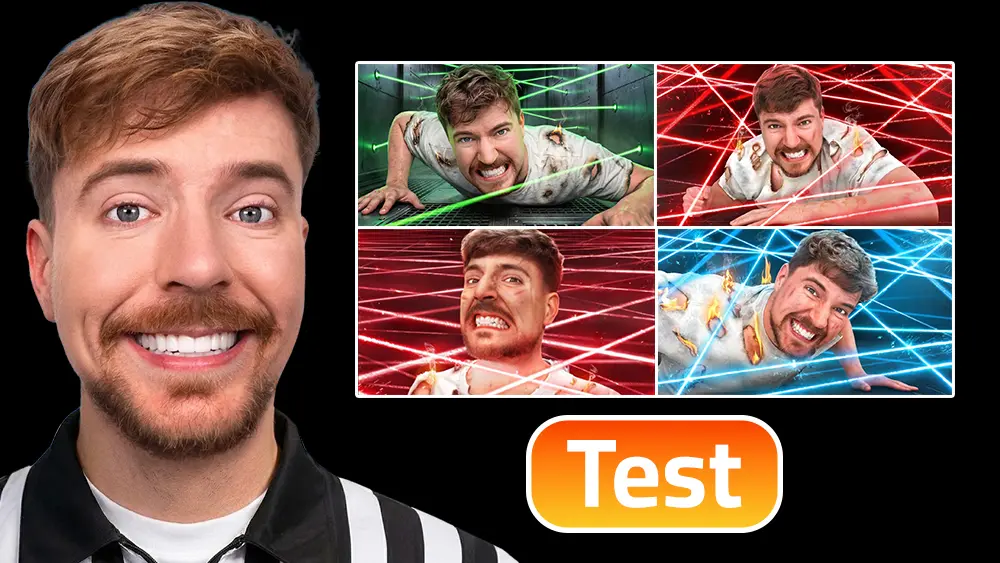
This rigorous, data-first approach is heavily documented by industry leaders like Jimmy Donaldson (MrBeast). His operation treats thumbnail design as a scientific discipline, often generating up to 50 distinct visual variations for a single upload. The level of obsession extends to microscopic psychological details. For instance, extensive A/B testing by his team revealed that closing his mouth and offering a subtle, genuine smile consistently outperformed the classic, exaggerated “open-mouth” expression he previously popularized. This shift toward authentic micro-expressions demonstrated that rigorous testing dictates the visual language of the entire platform. By co-founding ViewStats - an analytics platform built to track A/B testing data and outlier performance - the internal testing obsession of top creators has been validated as an essential industry standard.
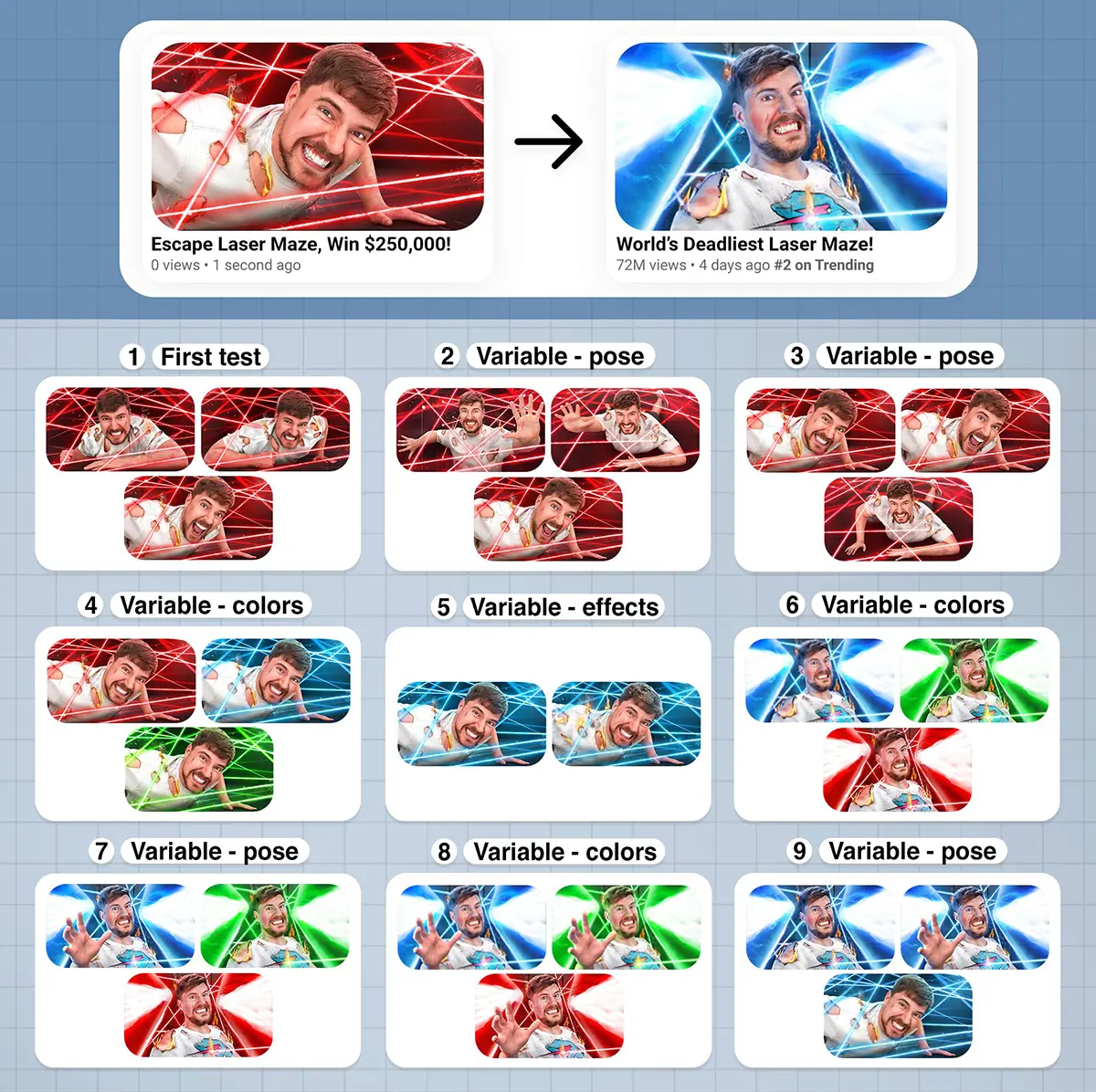
The urgency of this pre-publish testing framework revolves entirely around the “first 48 hours” rule. The initial window immediately following publication is the most critical period for a video’s lifecycle. If a video launches with a suboptimal thumbnail, the algorithm quickly registers the low click-through rate and throttles impressions, effectively suffocating the video’s momentum before it can reach a wider audience. Furthermore, if a thumbnail generates clicks but misrepresents the video’s energy, YouTube punishes the misleading packaging with up to a 40% audience loss in the first 30 seconds. Discovering a thumbnail is ineffective after it has already gone live risks killing the crucial early algorithmic surge - making it critical to get the asset perfectly optimized before hitting the publish button.
Methods Used by Top Creators
In-House Design Teams and Internal Polls
Channels operating at an enterprise level bypass early algorithmic risk by employing dedicated, full-time thumbnail designers. These professionals do not simply create artwork - they engineer psychological triggers designed to command attention within the 0.3 seconds a viewer spends evaluating an image on their mobile feed. Top-performing visual assets are strictly limited to a maximum of three visual elements (the subject, a short text overlay, and a supporting graphic) to avoid visual clutter and design anxiety.
To ensure these assets are effective, design teams rely heavily on internal validation before algorithmic exposure. To simulate audience reaction without risking the video’s launch metrics, large production companies utilize internal team Slack polls and private Discord community votes. By presenting multiple variations to a closed network of staff or highly engaged community members, teams can isolate which visual hierarchy immediately draws the eye. This pre-publish feedback loop ensures that the imagery, color grading, and text alignment resonate with human psychology and create a strong curiosity gap prior to the asset being subjected to public algorithmic scrutiny.
YouTube’s Native Test and Compare
Once a video is live, established channels lean heavily on YouTube’s built-in Test and Compare tool. This native feature automates the process of A/B/C testing by allowing creators to upload up to three different thumbnail variants simultaneously directly within YouTube Studio. The platform automatically distributes traffic equally across all variants, removing the timing biases and audience composition variables that previously plagued manual thumbnail swapping. Crucially, the winning metric for this native tool is not click-through rate - it is watch time share. The variant that keeps viewers watching the longest is declared the winner, ensuring that the thumbnail accurately represents the content.
| Feature | Manual Thumbnail Swap | YouTube Test and Compare |
|---|---|---|
| Traffic Distribution | Uncontrolled, timing-dependent | Equal split, automated |
| Winning Metric | Subjective or CTR-based | Watch time share |
| Statistical Reliability | Low | High |
| Setup Complexity | None | Low |
Despite its power, the native tool presents significant limitations for newer or smaller creators. The feature requires high impression volumes to reach statistical significance - a video generating fewer than 1,000 impressions per day may require the maximum test duration of 14 days to identify a winner, which is too slow to capitalize on launch momentum. Furthermore, certain content types (Shorts, mature audiences, made-for-kids videos) are entirely excluded from eligibility. Most importantly, the tool operates strictly post-publish, which still subjects the video to the inherent risks of launching with a potentially inferior control variant during the vital first 24 hours.
Full breakdown: YouTube Test and Compare vs Free Community A/B Testing - when to use each tool and why the best strategy uses both at different stages.
Third-Party Tools (TubeBuddy, ViewStats)
To supplement native features, professional operations utilize advanced third-party analytics ecosystems. Tools like TubeBuddy allow for sophisticated A/B testing that goes beyond mere thumbnails, giving creators the ability to test titles, descriptions, and metadata while tracking custom metrics like raw click-through rate and engagement metrics across specific traffic sources. Simultaneously, platforms like ViewStats provide deep competitor analysis, tracking the exact A/B test histories and thumbnail changes of outlier videos to reverse-engineer successful packaging strategies across entire niches.
While highly effective, most small creators cannot afford this workflow. TubeBuddy’s advanced A/B testing functionalities are locked behind higher-tier subscription plans (Star or Legend), costing up to $40 monthly. Similarly, accessing deep thumbnail research and cross-niche outlier detection capabilities on ViewStats requires a Pro tier subscription at $49.99 per month. The combination of recurring financial costs and high traffic prerequisites effectively gates this professional methodology away from independent channels.
Full tool comparison: 8 Best YouTube Thumbnail A/B Testing Tools in 2026 - every major platform reviewed with pricing, pros, cons, and who each tool is best for.
The Rise of Community-Based Testing for Smaller Channels
The optimization landscape presents a stark gap for emerging channels: small creators have no internal team, no dedicated budget for premium analytics platforms, and no existing audience large enough to poll reliably. When small channels utilize post-publish testing tools, they lack the impression volume necessary to conclude a test before the video’s initial momentum entirely dissipates, often resulting in “Inconclusive” data. Consequently, they are forced to launch videos entirely blind, hoping their intuition aligns with viewer preferences.
To fill this critical void, community voting platforms have emerged as a viable solution. These platforms operate on a system of blind A/B voting, where independent users choose between two or more thumbnails before seeing anyone else’s opinion. This methodology is critical because traditional feedback mechanisms - such as Reddit comment threads or public Discord channels - are highly susceptible to the bandwagon effect. Once a user reads other opinions, it compromises the raw, instinctual first impression that governs real-world click behavior. Blind voting simulates an authentic feed impression, isolating the viewer’s genuine, uninfluenced preference.
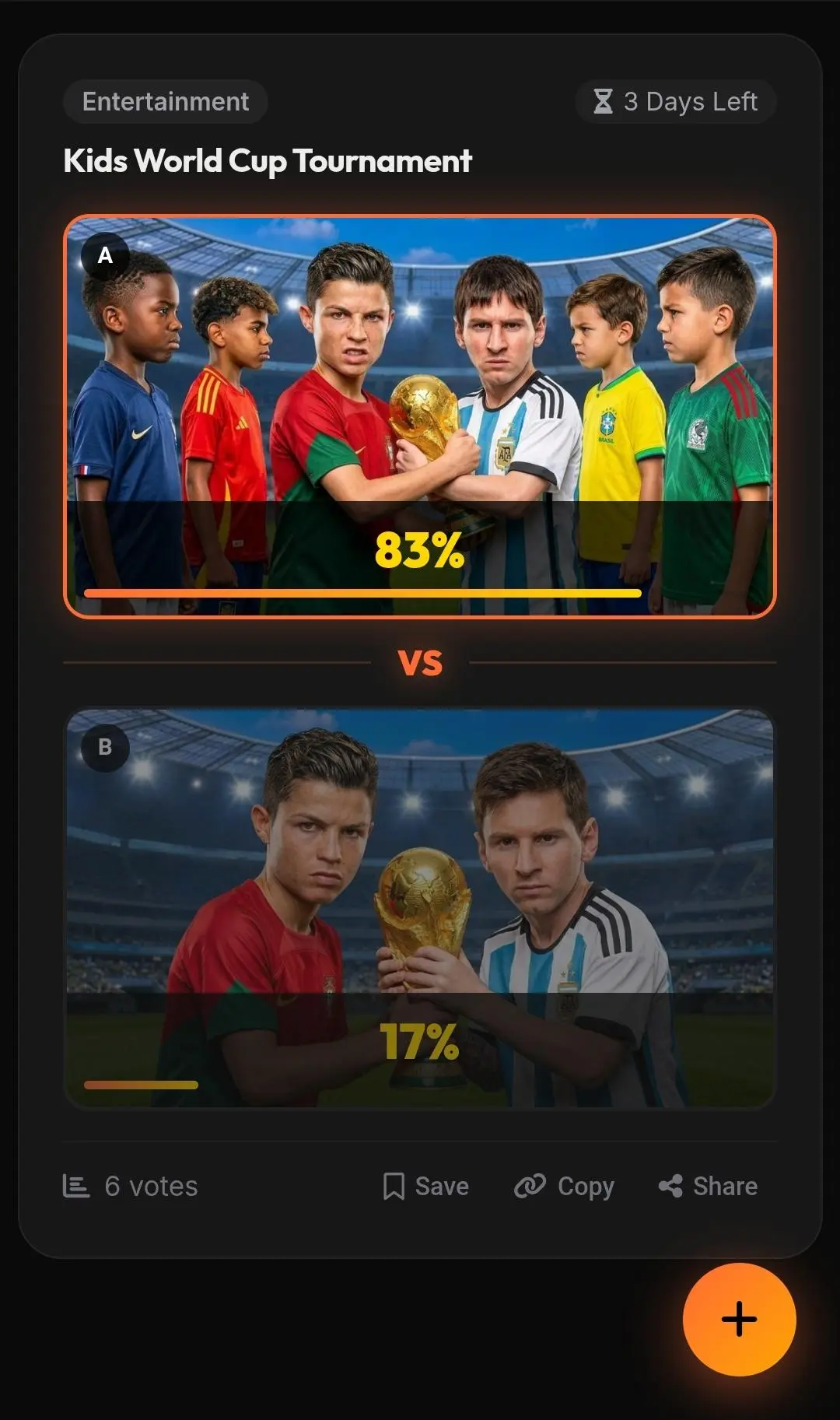
Platforms such as Touhfa Arena leverage this exact methodology to give any creator access to the same pre-publish feedback loop that big channels use internally. By submitting variants to a blind community vote, smaller channels can crowdsource statistically relevant preferences without requiring a massive internal audience or paying exorbitant subscription fees. This levels the playing field, allowing independent creators to identify a winning visual asset before publishing, thereby eliminating the risk of sacrificing their click-through rate during the foundational algorithmic evaluation period.
A Simple Pre-Publish Testing Checklist Anyone Can Use
To execute a professional-grade thumbnail testing strategy without enterprise resources, use the following workflow:
1. Design 2-3 variants (not 1) Isolate a single variable per test. If testing a different facial expression or a new font, keep the background identical. Distinct variations ensure that the resulting data points precisely to what drives viewer engagement. Limit designs to a maximum of three visual elements to avoid overwhelming the viewer.
2. Check technical quality (resolution, contrast, mobile readability) Ensure the canvas size is at least 1280x720 pixels, operating within an sRGB color profile to prevent colors from shifting upon upload. Keep the lower-right corner clear of critical information to account for YouTube’s duration badge. Scale the image down to 210x118 pixels to verify that the subject and text remain entirely legible on mobile screens - or use the YouTube Thumbnail Previewer to instantly see exactly how your thumbnail looks at every size and on different devices, before you upload anything.
3. Submit to community vote (free) Utilize a blind A/B voting platform such as Touhfa Arena to gather unbiased feedback. Ensure the community evaluates the image based on initial instinct rather than group consensus - the blind voting mechanism guarantees this automatically.
4. Review results and pick winner Analyze the voting data to identify which variant creates the strongest pattern interrupt. Discard personal bias - the best thumbnail is rarely the creator’s personal favorite, but rather the one the data proves is most effective.
5. Upload to YouTube Launch the video featuring the community-validated asset to maximize the click-through rate during the foundational 48-hour launch window.
6. Optional: run YouTube Test and Compare post-publish Use the pre-publish community winner as the baseline control. Upload two new secondary variations to the native Test and Compare tool to chase a higher watch time share over the following two weeks.
Frequently Asked Questions
Do all big YouTubers test their thumbnails?
Yes. The industry consensus dictates that relying on intuition is deeply flawed. Channels with significant viewership treat thumbnail iteration as a core operational protocol. Major creators frequently employ dedicated designers, utilizing internal polls and native A/B testing tools, understanding that continuous testing is the only methodology for sustained algorithmic growth and audience retention.
How many thumbnail variants should I create per video?
For formal testing within native platforms or community voting tools, creating two to three distinct variations is the optimal benchmark. While massive production teams might ideate dozens of concepts, condensing those ideas into a maximum of three distinct, high-quality variants ensures that test data remains statistically clear, actionable, and free from variable overlap.
Can I test thumbnails for free without a large audience?
Absolutely. By utilizing blind A/B voting platforms like Touhfa Arena, creators can submit their designs for community evaluation before the video is ever published. This allows emerging channels to gather unbiased, professional-grade feedback entirely free of charge, circumventing the need for large internal audiences, high daily impression volumes, or expensive software subscriptions.
Related Guides
- YouTube Thumbnail A/B Testing: Complete 2026 Guide - The full pillar guide covering all methods, tools, CTR benchmarks, and step-by-step walkthroughs
- AI Thumbnail Analyzers vs Real Community Voting - Why AI scores fall short and when human votes give you a stronger CTR signal
- YouTube Test and Compare vs Free Community Testing - A detailed breakdown of when to use each tool and why the best answer is both
- 8 Best YouTube Thumbnail A/B Testing Tools in 2026 - Full comparison of every major tool from free community voting to $75/month enterprise platforms
- Does A/B Testing Really Increase YouTube CTR? - The data behind thumbnail testing and realistic improvement benchmarks by niche